PanAfGeo Logo EU Emblem

PanAfGeo+ at the 15th Annual Mineral Wealth Conference 2026 in Uganda

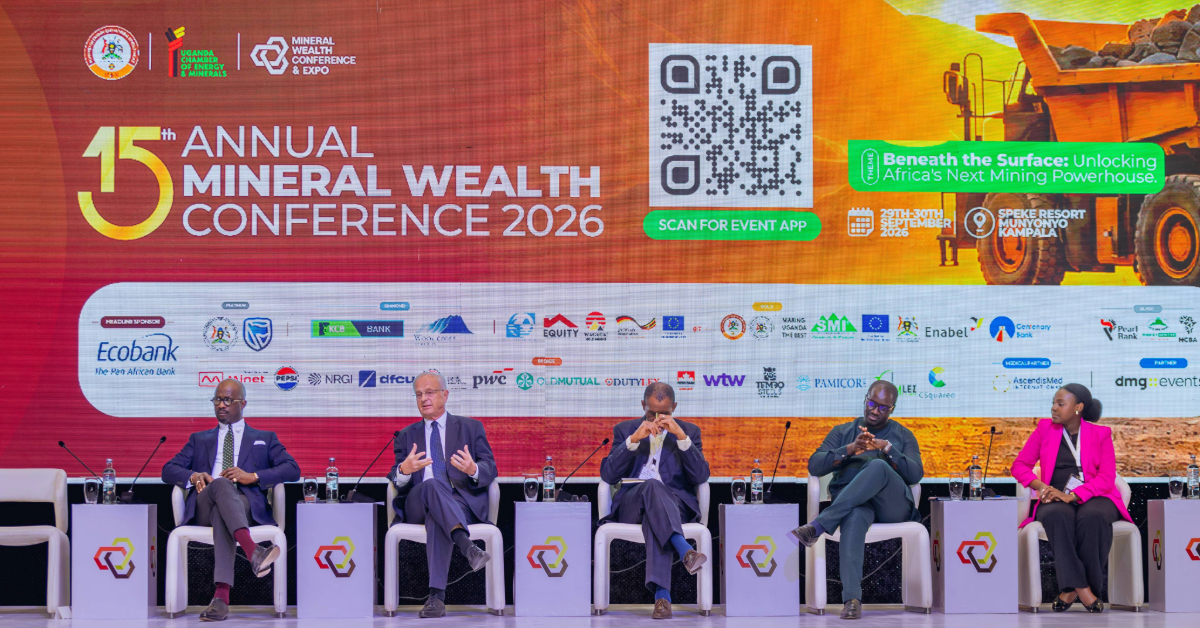
The 15th Annual Mineral Wealth Conference took place on 29-30 September 2026 at Speke Resort Munyonyo, Uganda. The event was organised by the Uganda Chamber of Energy and Minerals (UCEM), in collaboration with the Ministry of Energy and Mineral Development of the Government of Uganda and other stakeholders.


Held under the theme “Beneath the Surface: Unlocking Africa’s Next Mining Powerhouse”, the conference brought together representatives of the mining and minerals sector and provided an important platform for discussion, networking, and promoting Uganda’s mineral potential.


The Geological Survey of Slovenia (GeoZS) actively participated in the conference programme. Špela Kumelj presented the PanAfGeo+ Uganda Country Window and promoted the Graduate Training Programme, contributing both through a presentation and as a panellist in one of the conference’s technical sessions.


Dr. Slavko Šolar participated as a panellist in the main-stage discussion, “What It Really Takes to Attract Global Mining Capital?”, contributing to the debate on investment and the development of the mining sector.


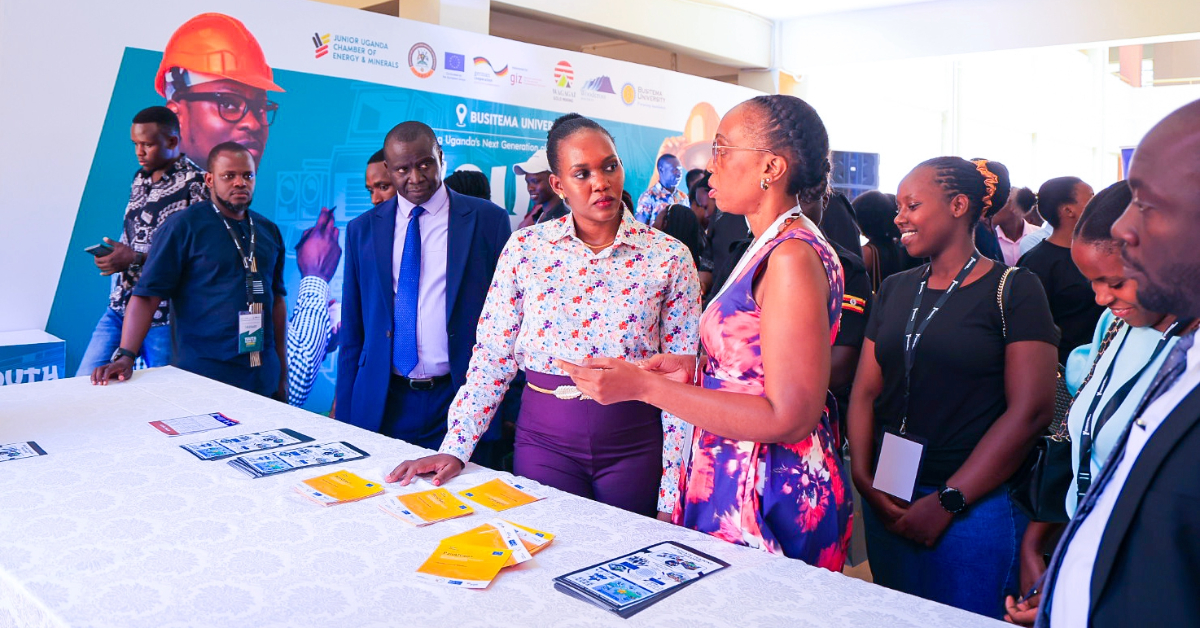
The PanAfGeo+ Uganda Country Window was also presented at a dedicated exhibition booth, providing an opportunity to showcase project activities, engage with conference participants and increase the visibility of the project and its training opportunities. The booth was coordinated by Victoria Kiwanuka.


The conference provided an opportunity to strengthen PanAfGeo+’s visibility, promote the Graduate Training Programme and engage with stakeholders from Uganda’s and Africa’s minerals sector.

PanAfGeo+ Country Window Tanzania Mine Closure Training

Two PanAfGeo+ capacity-building workshops held in Kahama brought together 53 government officials to strengthen knowledge and practical capacity for mine closure in Tanzania.


From 7 to 19 September 2026, two six-day capacity-building workshops on mine closure were held in Kahama, Tanzania, as part of the PanAfGeo+ Country Window Tanzania.


Led by the Geological Survey of Finland (GTK), with the training conducted by the Geological Survey of Sweden (SGU), the workshops brought together 53 government officials from Tanzania’s Ministry of Minerals, Mining Commission and National Environment Management Council (NEMC).


The training aimed to strengthen the capacity of relevant Tanzanian institutions in mine closure and contribute to a more responsible and sustainable mining sector.

Combining knowledge with practical experience

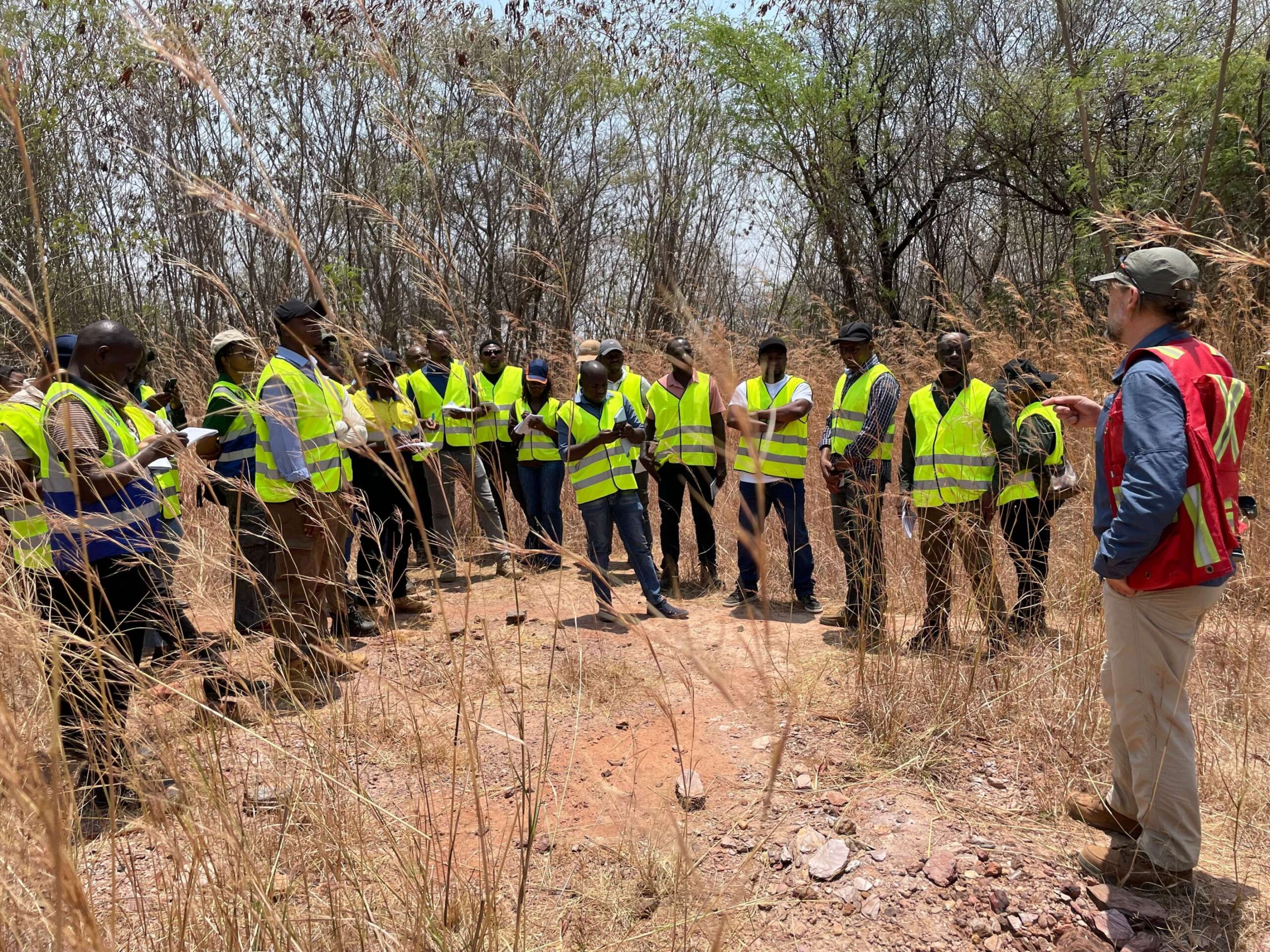
Throughout the training, participants combined theoretical sessions and group work with practical assignments and site visits.

As part of the training, participants identified almost 60 medium- to large-scale mines expected to close in Tanzania in the coming decades and carried out relevant gap analyses.

Participants also visited the closed Golden Pride mine in Nzega District and the Buzwagi gold mine in Kahama. The field visits provided an opportunity to learn about mine closure activities in practice and to compare observations with Tanzania’s current Mine Closure Guideline and international best practices.

Putting the training into practice

Participants were selected based on their roles and their ability to contribute to mine closure procedures and activities within their respective organisations.


The knowledge gained during the training can be applied directly across different areas of their work. Inspectors can use it to support compliance in the field and advise on mine closure activities, while officials involved in Environmental and Social Impact Assessment (ESIA) approvals can strengthen their review and evaluation of mine closure provisions before licence approval. Officials working on policies and guidelines, as well as those participating in Mine Closure Committee meetings, can also apply the knowledge gained through the training in their respective responsibilities.


Feedback from participants highlighted the value of the training. One participant noted: “I would like to express my sincere appreciation to our trainers for the valuable knowledge and new skills I have gained from this training. I believe these skills have given me a new perspective and greater focus in carrying out my work responsibilities.”


The participant also highlighted the positive learning environment and the trainers’ enthusiasm and support, which helped make the training engaging and productive.

Continuing the collaboration

The workshops in Kahama form part of the wider PanAfGeo+ Country Window Tanzania activities. A third and final training event is planned for May 2027, when the participating organisations and the Geological Survey of Sweden will continue their collaboration to further strengthen capacity on mine closure in Tanzania.

Youth Mining Day 2026 in Uganda – Empowering Uganda’s Next Generation of Mineral Sector Leaders

The Youth Mining Day 2026, held on 14 August 2026 at Busitema University, brought together young people and key stakeholders from Government, Industry, Academia, Development partners, Recruitment companies and Artisanal and Small-scale mining players to discuss how Uganda’s next generation can meaningfully participate in the country’s growing mineral sector.


Organized by the Junior Uganda Chamber of Energy and Minerals (JUCEM) in partnership with the Uganda Chamber of Energy and Minerals (UCEM) and Busitema University, the event was conceived as a practical platform to bridge the gap between young people’s aspirations and the realities of Uganda’s mineral industry.


The event brought together representatives from the Ministry of Energy and Mineral Development (MEMD), GIZ, the Ministry of Science, Technology and Innovation, academic institutions including Busitema University, Makerere University and Kyambogo University, industry players including Woodcross Resources, Wagagai Gold Mine, Rwenzori Rare Metals, Aldelia and Q-Sourcing Servtec Uganda, the Uganda Association of Artisanal and Small-Scale Miners (UGAASM), the National Youth Council, and development partners including UNDP, as well as the PanAfGeo+ project.


A central issue throughout the event was the disconnect between academic training and the practical requirements of industry. The discussions consistently emphasised that universities cannot address the skills gap alone. Stronger partnerships with industry are needed to provide students with practical exposure, industrial attachments, internships and a clearer understanding of workplace expectations.


A notable opportunity to tackle this issue, presented at the event, was the PanAfGeo+ Uganda Country Window initiative, which will provide a 12-month paid Graduate Training Programme for 10 geoscience graduates, designed to strengthen the skills and professional development of young geoscience and mining professionals. Project representative from the Geological Survey of Slovenia, Victoria Kiwanuka, delivered a short presentation, took part in a panel discussion, and engaged with students and young professionals at the exhibition stand, providing information about the programme and opportunities for future participation. The programme will be implemented in collaboration with the Uganda Chamber of Energy and Minerals (UCEM).


Project team is encouraged by the strong interest shown by young people in pursuing careers in mining sector and by the opportunities that PanAfGeo+ creates for capacity building, knowledge exchange, and international cooperation across Africa.


Source: Youth Mining Day 2026 Report, prepared by Junior Uganda Chamber of Energy and Minerals (JUCEM)

PanAfGeo+ South Africa Country Window Launched to Strengthen Geoscientific Cooperation Between South Africa and Europe

The PanAfGeo+ South Africa Country Window was officially launched in Tzaneen, Limpopo Province, bringing together representatives from government, academia, geological surveys and international partners to strengthen scientific cooperation and support sustainable resource development.


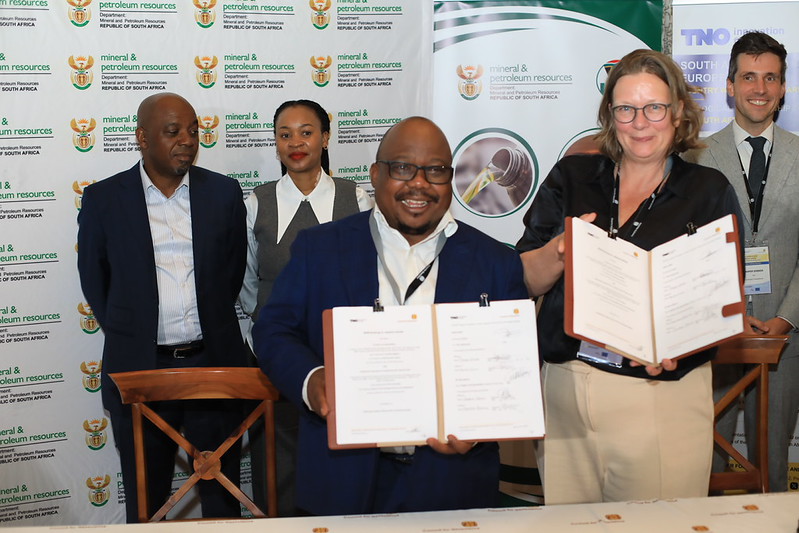
The two-day event marked an important milestone in the growing collaboration between the Council for Geoscience (CGS) and Geological Survey of the Netherlands (TNO), while reinforcing PanAfGeo+’s role in facilitating long-term partnerships between African and European Geological Surveys.


A milestone for international cooperation

A highlight of the launch was the signing of a Memorandum of Understanding (MoU) between the Council for Geoscience and TNO, establishing a framework for closer collaboration in areas including:

  • Critical raw materials
  • Geological mapping
  • Geodata and digital geoscience
  • Carbon Capture, Utilisation and Storage (CCUS)
  • Scientific knowledge exchange

The agreement was signed in the presence of South Africa’s Minister of Mineral and Petroleum Resources, Hon. Samson Gwede Mantashe, and the Ambassador of the Kingdom of the Netherlands to South Africa, H.E. Joanne Doornewaard, highlighting the strategic importance of international cooperation in addressing future energy and resource challenges.


PanAfGeo+ as a catalyst for partnership

The South Africa Country Window builds on cooperation already established through the PanAfGeo+ programme, one of the European Union’s Global Gateway flagship initiatives supporting geoscientific capacity development across Africa.

Country Windows are designed to respond to national priorities by fostering tailored collaboration between African and European Geological Surveys. Through technical exchanges, institutional cooperation and joint activities, they help strengthen national geoscientific institutions while encouraging lasting partnerships beyond individual training events.

The launch in South Africa demonstrates how PanAfGeo+ continues to create opportunities for knowledge exchange and scientific cooperation that support sustainable development and responsible resource management.


Addressing shared challenges

Throughout the workshop, participants explored topics that are increasingly important for both Africa and Europe, including critical raw materials, sustainable mining, geoscience diplomacy, geological mapping and the role of geoscience in supporting the global energy transition.

Technical presentations highlighted South Africa’s strategic role within global critical mineral value chains, while discussions emphasised the importance of scientific research, innovation and international collaboration in delivering long-term societal benefits.

The programme also included a field visit in the Tzaneen region, allowing participants to examine local geology and natural resources while connecting classroom discussions with practical geological observations.


Investing in future capacity

The event also highlighted the importance of investing in future generations of geoscientists. Discussions included opportunities to strengthen education, skills development and international collaboration, recognising that building scientific capacity remains essential for sustainable resource management and economic development.


Looking ahead

The launch of the South Africa Country Window marks the beginning of a new phase of collaboration between the Council for Geoscience, TNO and the wider PanAfGeo+ partnership.

By bringing together expertise from African and European Geological Surveys, the initiative will continue to promote scientific excellence, institutional cooperation and knowledge exchange, contributing to resilient geoscientific institutions and supporting sustainable development across Africa.
PanAfGeo+ Country Window Uganda: Geological Mapping of the First Selected Target – Bukusu and Bududa Carbonatites

A team of 18 geoscientists from Uganda, the Czech Republic, Slovenia, and Portugal conducted mineral exploration activities in the first selected target area in Uganda, aiming to promote Uganda’s mineral resources for further potential development.


During a three-week field campaign in May 2026, the team, comprising geologists from the Directorate of Geological Survey and Mines of Uganda (GSD), the Czech Geological Survey (CGS), the Portuguese Laboratório Nacional de Energia e Geologia (LNEG), and the Geological Survey of Slovenia (GeoZS), carried out geological mapping in the Bukusu and Bududa carbonatite complexes in the Manafwa and Bududa districts.


The Bukusu and Bududa carbonatitic bodies are part of the Cenozoic alkaline intrusions that form a larger suite of alkaline complexes in eastern Uganda. The Bukusu carbonatite complex comprises carbonatite breccia in the partially eroded core, surrounded by alkaline silicate and carbonatite ring-dykes, emplaced within rocks of a Na-K metasomatic halo. Together with the Bududa carbonatites, it is the largest carbonatite complex in the region.


Although the Bukusu area contains several mineral deposits, including vermiculite at Namekara, phosphate at Busumbu, and magnesite at Nangalwe, carbonatites in this region are also notable for their enrichment in several critical raw materials (CRM) such as Rare Earth Elements, Niobium, Zirconium and Titanium.


The primary objective of this initial field campaign was to carry out detailed geological mapping and produce a geological map of the Bukusu and Bududa area at a scale of 1:25,000, supplemented by comprehensive explanatory notes. These outputs will form the basis for subsequent phases of exploration investigation, specifically geochemical and geophysical investigations.


The work was organised into six groups (comprising members of GSD, CGS, and GeoZS): five focused on geological mapping, while the sixth managed community sensitisation activities and liaised with the local population. Over three weeks, approximately 220 square kilometres were mapped, delineating areas of carbonatite rocks, carbonatite breccias, and the extent of the metasomatic halo zone. During mapping, soil and rock samples were collected for detailed chemical and petrological studies.


Furthermore, during this field campaign, members of the geochemical and geophysical teams from LNEG and GeoZS made preliminary observations of the area to collect soil samples from the excavated soil profiles and assess site conditions, which will aid in planning forthcoming research activities.


The work carried out during this field campaign will improve our understanding of the local geological settings, helping to identify areas for further detailed mineral exploration.


Contact: Emil Pučko, Geological Survey of Slovenia (GeoZS) – emil.pucko@geo-zs.si

PanAfGeo+ WP2 training explores mineral resources assessment in the Bushveld Complex

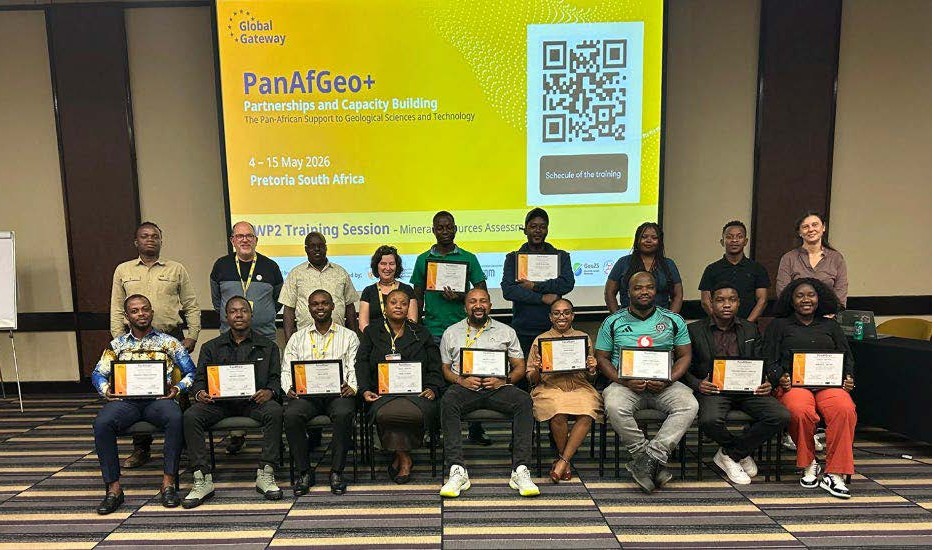
From 4 to 15 May 2026, PanAfGeo+ held its first WP2 – Mineral Resources Assessment training session in Pretoria, South Africa, with a focus on the geology and mineral resources of the Bushveld Complex.


Hosted by the Council for Geoscience (CGS) of South Africa, the two-week training brought together geoscientists from across Africa for a combination of classroom sessions, practical demonstrations and field-based learning. The programme covered exploration geology, geochemistry and geophysics, prospectivity mapping and spatial statistics, drawing on the expertise of trainers from the PanAfGeo+ partnership and South African specialists.


A practical component at the CGS National Core Library introduced participants to drill-core logging, hyperspectral scanning and procedures for archiving geological samples and cores.


The programme also included two days of field visits in the Bushveld Complex, where participants examined its stratigraphy and mineralised layers and exchanged directly with CGS specialists on exploration geology, geochemistry and geophysics.


The final part of the training addressed the Africa Mining Resource Classification System (AMREC) / Pan-African Resource Classification (PARC), based on the United Nations Framework Classification for Resources (UNFC), with a focus on consistent resource reporting, governance and informed decision-making. Read more about the PanAfGeo+ AMREC workshop and discussions on harmonised mineral resource governance.


The training was led by LNEG (Geological Survey of Portugal), with the involvement of African and European PanAfGeo+ partners and close collaboration with the Council for Geoscience. The Bushveld setting provided participants with an opportunity to connect mineral resources assessment methods with practical examples from one of Africa’s major mineral provinces.

PanAfGeo+ Workshop Advances Dialogue on Harmonised Mineral Resource Governance in South Africa

The PanAfGeo+ National AMREC/PARC – UNFC Workshop successfully concluded in Pretoria, South Africa, bringing together representatives from government institutions, geological surveys, academia, industry, and international organisations from across Africa and Europe.


Held under the PanAfGeo+ African Expert Networks (SO1) activities, the two-day workshop focused on advancing dialogue and practical understanding of the United Nations Framework Classification for Resources (UNFC), the Africa Mining Resource Classification System (AMREC), and the Pan-African Resource Classification (PARC).


Participants engaged in policy discussions, technical sessions, case studies, and practical exercises exploring harmonised mineral resource reporting, governance approaches, and implementation pathways aligned with the Africa Mining Vision and Agenda 2063.


The workshop highlighted the importance of expert networks, multistakeholder collaboration, and Africa–Europe partnerships in strengthening sustainable and transparent mineral resource management across the continent. The event was organised in cooperation with the International Center of Excellence on Sustainable Resource Management Europe (ICE SRM EU). Experts from African and European institutions shared experiences related to reporting systems, governance frameworks, inventories, and capacity-building approaches, fostering dialogue and exchange between participants from different sectors.


Slavko Šolar, Geological Survey of Slovenia, noted that: “The level of engagement and exchange throughout the workshop has been very encouraging. It reflects a strong commitment across Africa and Europe to strengthening harmonised approaches to mineral resource governance and cooperation.”


Tunde Muritala Arisekola, African Minerals Development Centre (AMDC), added: “Workshops like this are essential for building long-term capacity and strengthening collaboration between institutions. Through knowledge sharing and practical dialogue, we support countries in advancing more sustainable and informed approaches to resource management.”


The PanAfGeo+ programme, funded by the European Commission, continues to foster collaboration between African and European Geological Surveys, supporting technical development, expert networks, and knowledge exchange across the geoscience community.


The presentation materials shared during the PanAfGeo+ National AMREC/PARC – UNFC Workshop are now available for download. Download the Workshop Presentations (ZIP, 23 MB)

PanAfGeo+ Country Window DRC Officially Launched in Kinshasa

19–20 March 2026 | Kinshasa, Democratic Republic of the Congo

The PanAfGeo+ Country Window for the Democratic Republic of the Congo (CW DRC) was officially launched on 19–20 March 2026 in Kinshasa, bringing together representatives from the Ministry of Mines of the DRC, the European Union Delegation, European and African partners, geological institutions, technical experts, and stakeholders from across the mining and geoscience sectors.

Held at the Hotel Pullman in Kinshasa, the event marked an important milestone in strengthening Africa–Europe cooperation in geosciences, critical raw materials, and sustainable mineral development.

The opening session featured remarks from Fabrice Basile, Chargé d’affaires a.i. of the EU Delegation in the DRC, Laurent Sillano from DG INTPA, and H.E. Louis Watum Kabamba, Minister of Mines of the Democratic Republic of the Congo. During the ceremony, the Terms of Reference for the PanAfGeo+ Country Window DRC were officially signed, reaffirming the shared commitment between European and Congolese partners to jointly implement the initiative.

The PanAfGeo+ Country Window DRC is coordinated by BRGM – the French Geological Survey – in collaboration with the Congolese Geological Survey (SGN-C) and a broad consortium of European and Congolese partners. The initiative aims to support the Ministry of Mines and national institutions in strengthening geoscientific capacity, improving geological data acquisition and management, and promoting responsible investment opportunities in the mining sector.

The project is structured around five main work packages:

  • Evaluation of Geological Research Zones (ZRG)
  • Development and management of the Geological Digital Database (BNDG)
  • Evaluation of artisanal mining zones, mining waste and decarbonisation activities
  • Capacity building and technical training
  • Project management, coordination and communication


The discussions highlighted the importance of geological knowledge in supporting informed decision-making, reducing investment risks, and strengthening sustainable resource governance in the DRC. Participants also emphasised the need to progressively improve access to geological data and reinforce institutional cooperation.

Throughout the meeting, international partners including AfricaMuseum, BRGM Explore, FERDI, ILB, AWIMA/WIM DRC, DMT-KB and LGI presented their planned contributions to the project, ranging from geological assessments and mapping activities to ESG training, investment facilitation, communication, project management, and stakeholder engagement.

The second day focused on technical coordination and implementation procedures, including timelines, governance structures, financial regulations, stakeholder responsibilities, and upcoming operational actions across all work packages.

Participants further discussed the importance of long-term cooperation between African institutions, European Geological Surveys, universities, development partners, and local stakeholders in strengthening geological knowledge and supporting sustainable development linked to critical raw materials in the Democratic Republic of the Congo.

The PanAfGeo+ programme is funded by the European Union under the Global Gateway strategy and implemented through partnerships between African and European geological surveys and institutions.

PanAfGeo+ INVEST Officially Launched in Kinshasa to Strengthen Africa-Europe Cooperation on Critical Raw Materials

17-18 March 2026 | Kinshasa, Democratic Republic of the Congo

The PanAfGeo+ INVEST Kick-off Meeting officially took place on 17-18 March 2026 in Kinshasa, Democratic Republic of the Congo, bringing together partners and stakeholders from across Africa and Europe to launch a new phase of collaboration on critical raw materials, geological knowledge, and sustainable investment. The meeting marked the official start of the PanAfGeo+ INVEST component and provided an opportunity to present the programme’s objectives, governance structure, work packages, and Country Window activities in the Democratic Republic of the Congo, Namibia, and South Africa.

The opening session highlighted the strong commitment of the European Union Delegation in the DRC, the Ministry of Mines of the Democratic Republic of the Congo, and institutional partners to strengthening Africa–Europe cooperation in geosciences and responsible mineral resource development.

PanAfGeo+ builds on the achievements of previous phases of the programme (2016–2024), which engaged 22 African countries and trained more than 1,700 geoscience professionals across the continent. The initiative also extends the AfricaMaVal programme, which identified around 100 investment opportunities through collaboration between African and European partners.

With a planned budget of approximately €51 million between 2025 and 2029, PanAfGeo+ aims to support sustainable management of geological resources, strengthen geoscientific capacity, and improve the enabling environment for investment linked to critical raw materials.

Throughout the two-day meeting, participants discussed:

  • EU mining investment facilitation
  • Strategic intelligence and analytical services
  • CRM project pipeline development
  • Communication and dialogue in geoscience
  • Country Window activities in the DRC, Namibia, and South Africa

The discussions highlighted the importance of collaboration between African institutions, European Geological Surveys, development partners, and technical experts in strengthening geological knowledge and supporting sustainable mineral development.

A dedicated session on communication and dialogue in geoscience, coordinated by EuroGeoSurveys (EGS), emphasised the importance of visibility, coordinated communication, and promoting dialogue between African and European partners under a unified PanAfGeo+ identity.

The second day focused on implementation and coordination, including governance structures, financial procedures, stakeholder engagement, and recommendations from the Advisory Board. Participants also explored the future PanAfGeo+ INVEST Forum, designed to support knowledge sharing, matchmaking, dissemination of project results, and investment dialogue across the critical raw materials value chain.

Participants further underlined the importance of improving geological data accessibility, reinforcing African institutional ownership, and strengthening long-term Africa–Europe cooperation in support of sustainable development and responsible resource governance.

The momentum of the initiative continues with the launch of the PanAfGeo+ Country Window DRC activities immediately following the kick-off meeting.

The PanAfGeo+ programme is funded by the European Union under the Global Gateway strategy and implemented through partnerships between African and European geological surveys and institutions.

PanAfGeo+ at Mining Indaba 2026: Strengthening Africa–Europe Cooperation in Geosciences

Cape Town, South Africa | Mining Indaba 2026

PanAfGeo+ participated in Mining Indaba 2026 in Cape Town, engaging with stakeholders from across Africa and Europe to highlight the role of geoscience in supporting sustainable investment, resource governance, and long-term development.


Throughout the event, PanAfGeo+ was present at the European Commission – Team Europe Booth (T152), where discussions focused on current and future activities under the PanAfGeo+ programme, including the Invest Component and Country Windows in the Democratic Republic of the Congo, Namibia, and South Africa.


A key highlight of the week was the celebration marking the launch of the new phase of PanAfGeo+, which brought together around 100 participants from geological surveys, European and African institutions, development partners, and the wider geoscience community.


The event highlighted the growing importance of geosciences in Africa’s development agenda and provided a platform for dialogue on sustainable resource management, investment, resilience, and regional cooperation.


Participants were honoured to welcome:

  • Myriam Ferran, Deputy Director-General, DG INTPA, European Commission
  • Tirza van Daalen, President of EuroGeoSurveys (EGS)
  • Gabriel Data, President of the Organisation of African Geological Surveys (OAGS)


The panel discussions and exchanges throughout the event reinforced the importance of strong Africa–Europe partnerships and collaborative expert networks in advancing sustainable and responsible development of mineral resources.


With €21 million committed to the Invest Component and Country Windows, the new phase of PanAfGeo+ marks an important step forward in strengthening geoscientific capacity, partnerships, and investment support across Africa.


Pictures from the PanAfGeo+ launch celebration at Mining Indaba 2026 are available here.