


PanAfGeo Logo EU Emblem

PanAfGeo+ at the 15th Annual Mineral Wealth Conference 2026 in Uganda

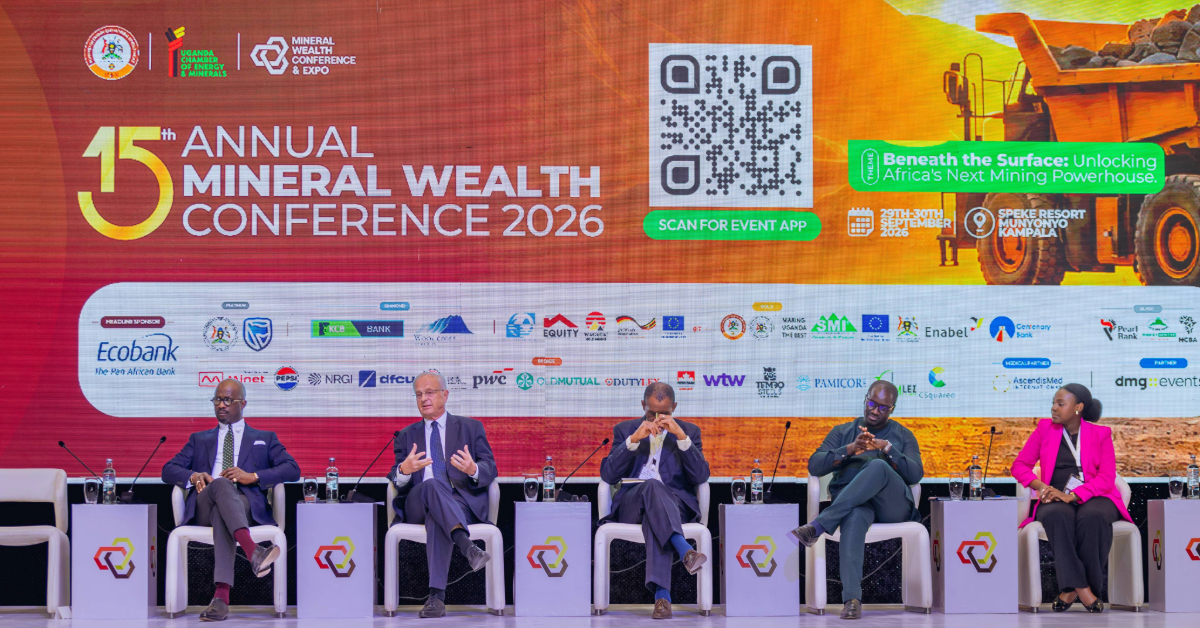
The 15th Annual Mineral Wealth Conference took place on 29-30 September 2026 at Speke Resort Munyonyo, Uganda. The event was organised by the Uganda Chamber of Energy and Minerals (UCEM), in collaboration with the Ministry of Energy and Mineral Development of the Government of Uganda and other stakeholders.


Held under the theme “Beneath the Surface: Unlocking Africa’s Next Mining Powerhouse”, the conference brought together representatives of the mining and minerals sector and provided an important platform for discussion, networking, and promoting Uganda’s mineral potential.


The Geological Survey of Slovenia (GeoZS) actively participated in the conference programme. Špela Kumelj presented the PanAfGeo+ Uganda Country Window and promoted the Graduate Training Programme, contributing both through a presentation and as a panellist in one of the conference’s technical sessions.


Dr. Slavko Šolar participated as a panellist in the main-stage discussion, “What It Really Takes to Attract Global Mining Capital?”, contributing to the debate on investment and the development of the mining sector.


The PanAfGeo+ Uganda Country Window was also presented at a dedicated exhibition booth, providing an opportunity to showcase project activities, engage with conference participants and increase the visibility of the project and its training opportunities. The booth was coordinated by Victoria Kiwanuka.


The conference provided an opportunity to strengthen PanAfGeo+’s visibility, promote the Graduate Training Programme and engage with stakeholders from Uganda’s and Africa’s minerals sector.
Youth Mining Day 2026 in Uganda – Empowering Uganda’s Next Generation of Mineral Sector Leaders

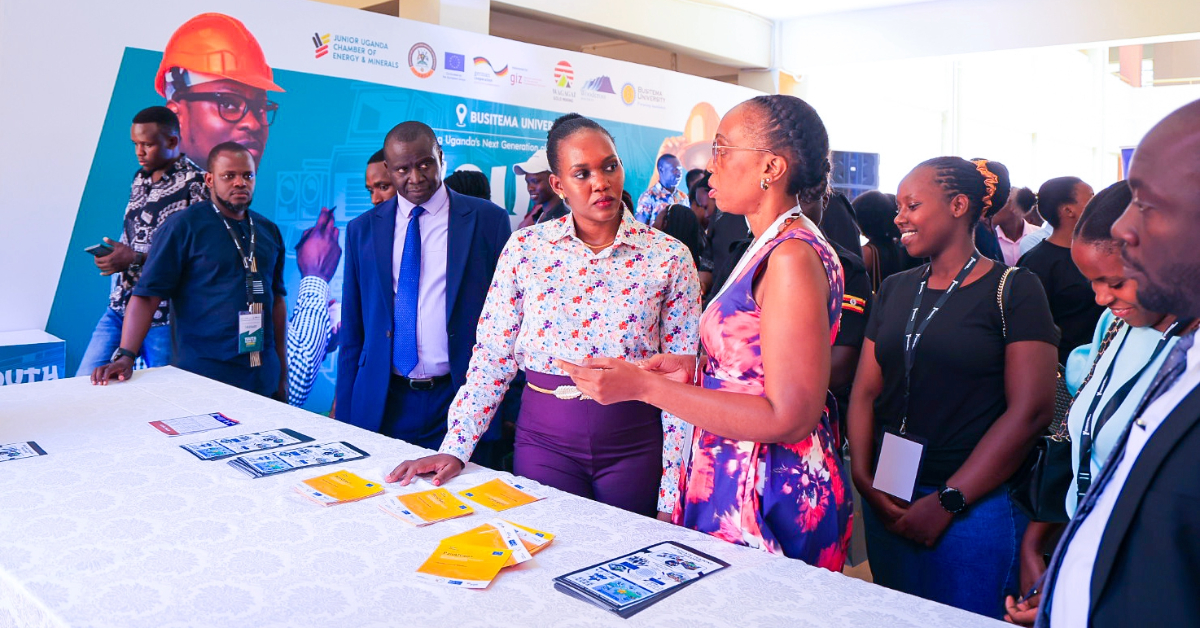
The Youth Mining Day 2026, held on 14 August 2026 at Busitema University, brought together young people and key stakeholders from Government, Industry, Academia, Development partners, Recruitment companies and Artisanal and Small-scale mining players to discuss how Uganda’s next generation can meaningfully participate in the country’s growing mineral sector.


Organized by the Junior Uganda Chamber of Energy and Minerals (JUCEM) in partnership with the Uganda Chamber of Energy and Minerals (UCEM) and Busitema University, the event was conceived as a practical platform to bridge the gap between young people’s aspirations and the realities of Uganda’s mineral industry.


The event brought together representatives from the Ministry of Energy and Mineral Development (MEMD), GIZ, the Ministry of Science, Technology and Innovation, academic institutions including Busitema University, Makerere University and Kyambogo University, industry players including Woodcross Resources, Wagagai Gold Mine, Rwenzori Rare Metals, Aldelia and Q-Sourcing Servtec Uganda, the Uganda Association of Artisanal and Small-Scale Miners (UGAASM), the National Youth Council, and development partners including UNDP, as well as the PanAfGeo+ project.


A central issue throughout the event was the disconnect between academic training and the practical requirements of industry. The discussions consistently emphasised that universities cannot address the skills gap alone. Stronger partnerships with industry are needed to provide students with practical exposure, industrial attachments, internships and a clearer understanding of workplace expectations.


A notable opportunity to tackle this issue, presented at the event, was the PanAfGeo+ Uganda Country Window initiative, which will provide a 12-month paid Graduate Training Programme for 10 geoscience graduates, designed to strengthen the skills and professional development of young geoscience and mining professionals. Project representative from the Geological Survey of Slovenia, Victoria Kiwanuka, delivered a short presentation, took part in a panel discussion, and engaged with students and young professionals at the exhibition stand, providing information about the programme and opportunities for future participation. The programme will be implemented in collaboration with the Uganda Chamber of Energy and Minerals (UCEM).


Project team is encouraged by the strong interest shown by young people in pursuing careers in mining sector and by the opportunities that PanAfGeo+ creates for capacity building, knowledge exchange, and international cooperation across Africa.


Source: Youth Mining Day 2026 Report, prepared by Junior Uganda Chamber of Energy and Minerals (JUCEM)

PanAfGeo+ Country Window Uganda: Geological Mapping of the First Selected Target – Bukusu and Bududa Carbonatites

A team of 18 geoscientists from Uganda, the Czech Republic, Slovenia, and Portugal conducted mineral exploration activities in the first selected target area in Uganda, aiming to promote Uganda’s mineral resources for further potential development.


During a three-week field campaign in May 2026, the team, comprising geologists from the Directorate of Geological Survey and Mines of Uganda (GSD), the Czech Geological Survey (CGS), the Portuguese Laboratório Nacional de Energia e Geologia (LNEG), and the Geological Survey of Slovenia (GeoZS), carried out geological mapping in the Bukusu and Bududa carbonatite complexes in the Manafwa and Bududa districts.


The Bukusu and Bududa carbonatitic bodies are part of the Cenozoic alkaline intrusions that form a larger suite of alkaline complexes in eastern Uganda. The Bukusu carbonatite complex comprises carbonatite breccia in the partially eroded core, surrounded by alkaline silicate and carbonatite ring-dykes, emplaced within rocks of a Na-K metasomatic halo. Together with the Bududa carbonatites, it is the largest carbonatite complex in the region.


Although the Bukusu area contains several mineral deposits, including vermiculite at Namekara, phosphate at Busumbu, and magnesite at Nangalwe, carbonatites in this region are also notable for their enrichment in several critical raw materials (CRM) such as Rare Earth Elements, Niobium, Zirconium and Titanium.


The primary objective of this initial field campaign was to carry out detailed geological mapping and produce a geological map of the Bukusu and Bududa area at a scale of 1:25,000, supplemented by comprehensive explanatory notes. These outputs will form the basis for subsequent phases of exploration investigation, specifically geochemical and geophysical investigations.


The work was organised into six groups (comprising members of GSD, CGS, and GeoZS): five focused on geological mapping, while the sixth managed community sensitisation activities and liaised with the local population. Over three weeks, approximately 220 square kilometres were mapped, delineating areas of carbonatite rocks, carbonatite breccias, and the extent of the metasomatic halo zone. During mapping, soil and rock samples were collected for detailed chemical and petrological studies.


Furthermore, during this field campaign, members of the geochemical and geophysical teams from LNEG and GeoZS made preliminary observations of the area to collect soil samples from the excavated soil profiles and assess site conditions, which will aid in planning forthcoming research activities.


The work carried out during this field campaign will improve our understanding of the local geological settings, helping to identify areas for further detailed mineral exploration.


Contact: Emil Pučko, Geological Survey of Slovenia (GeoZS) – emil.pucko@geo-zs.si