



The recent PanAfGeo+ WP6 training on Geoscientific Information Management, held from 12 to 23 October 2026 in Lobatse, Botswana, received coverage in two editions of DailyNews, Botswana’s national newspaper. The articles highlight the importance of strengthening geoscientific capacities, international cooperation and the contributions of European and African partners.
The first article, published on 15 October 2026 under the headline “Botswana and France strengthen geological cooperation”, covered the opening ceremony of the training. It featured remarks from H.E. Valérie Baraban, French Ambassador to Botswana, who highlighted the importance of geological cooperation, knowledge exchange and strengthening institutional capacities across Africa. The article also included contributions from Puso Akanyang, Acting CEO of the Botswana Geoscience Institute (BGI), who emphasised the importance of effective geoscientific data management for economic development and informed decision-making.
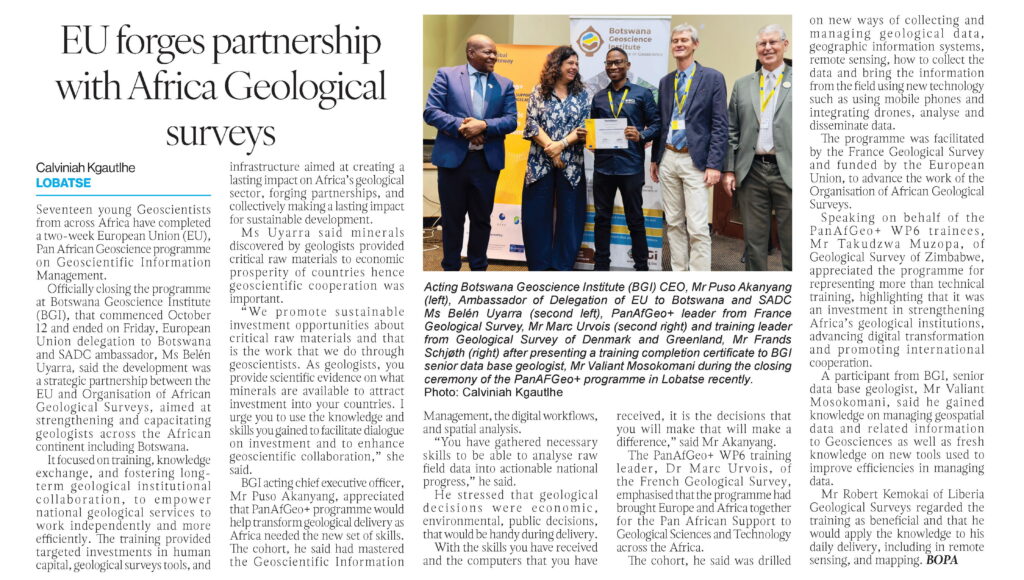
The second article, published on 4 November 2026 under the headline “EU forges partnership with Africa Geological surveys”, covered the closing ceremony of the two-week training, which brought together 17 geoscientists from across Africa.
The coverage featured remarks from H.E. Belén Uyarra, EU Ambassador to Botswana and SADC, who emphasised the importance of geoscientific cooperation in supporting sustainable investment and the development of critical raw materials. It also highlighted contributions from BGI, the PanAfGeo+ training team and participants, who shared how the skills gained in geological data management, GIS and remote sensing could support their work.
Together, the two articles highlight the role of PanAfGeo+ in bringing African and European geological surveys together through training, knowledge exchange and long-term institutional cooperation.
Read the full articles:


