PanAfGeo Logo
Calendar Icon
EU Emblem

PanAfGeo: Advancing Africa’s Geoscience Future with PanAfGeo+

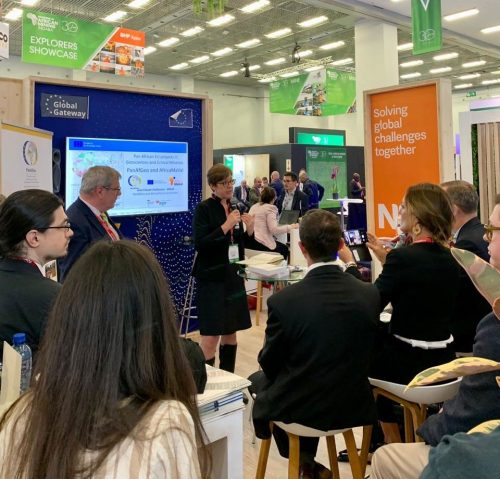
PanAfGeo-2 seized the spotlight at Mining Indaba 2025 this week, making a strong impact at the European Commission/Team Europe pod.

Throughout the event, PanAfGeo-2 maintained a strong presence at the EU Pavilion, engaging in discussions with key institutions such as the Council for Geoscience, the Geological Survey of Senegal, the Ministry of Mines, Industry and Technological Development, Cameroon, and the Geological Survey of Namibia.

Strengthening EU-Africa Geoscience Collaboration
On 5th February, two key meetings took place.

In the morning, the Presidents of EuroGeoSurveys (EGS) and the Organisation of African Geological Surveys (OAGS) held a high-level introductory meeting, supported by their respective teams. Rokhaya Samba Diene, President of OAGS, warmly welcomed Tirza Van Daalen, the newly appointed President of EGS. Discussions centred on strengthening EU-Africa geoscience collaboration and reinforcing the commitment to working together through the PanAfGeo-2 programme.

PanAfGeo Achievements and the Introduction of PanAfGeo+

In the afternoon, a high-level meeting was convened to reflect on the achievements of PanAfGeo-2 as it concludes and to introduce PanAfGeo+, an ambitious new phase set to run from 2025 to 2029. This next chapter will further enhance EU-Africa partnerships, strengthen geological survey capacities across Africa, and foster economic cooperation in critical raw materials.

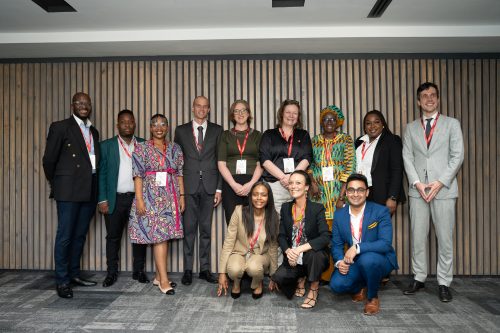
The event brought together key geoscience experts, policymakers, and industry leaders, including Rokhaya Samba Diene, President of the OAGS; Tirza Van Daalen, President of EGS; Cécile Tassin-Pelzer, Adviser at the Africa Directorate of the European Commission (DG INTPA); as well as high-level representatives from African and European geological institutions.

Speaking at the event, Rokhaya Samba Diene reaffirmed the strong collaboration between OAGS and EGS, highlighting how PanAfGeo has reinforced ties between African and European geological institutions, fostering a shared vision for sustainable geoscience development across the continent.
Tirza Van Daalen echoed this sentiment, underscoring the importance of continued cooperation and stating that the PanAfGeo programme has laid the foundation for a long-term EU-Africa partnership in geosciences. She emphasised that with PanAfGeo+, these collaborations will be further strengthened, ensuring that Africa’s geological potential plays a key role in global sustainability.

During the meeting, Jean-Claude Guillaneau and Nicolas Charles, Coordinators of the PanAfGeo Project (BRGM), presented key findings from Phases 1 and 2, demonstrating the initiative’s impact on advancing geological knowledge, building technical capacity, and fostering EU-Africa cooperation. Since its inception in 2016, PanAfGeo has trained nearly 1,750 geoscientists coming from all African countries, significantly contributing to the development of Africa’s geoscience sector. The coordinators also introduced PanAfGeo+, outlining its objectives to further develop African geological surveys and strengthen cooperation in the exploration of critical raw materials.

A high-profile panel discussion followed, focusing on the future of mineral exploration, environmental protection, and sustainable resource management. Moderated by Willem Meintjes, Executive Manager at the Council for Geoscience, South Africa, and Julie Hollis, Secretary General of EGS, the panel featured Jean-Claude Guillaneau, Coordinator of PanAfGeo (BRGM); Claudio Bacigalupi, Head of Cooperation at the EU Delegation to Zambia; and Raoul Wazenga, Director General of the National Geological Survey of Congo (DRC). The discussion provided key insights into the challenges and opportunities facing Africa’s geoscience sector and the role PanAfGeo+ will play in addressing them.

The meeting served as a platform for engaging discussions, expert insights, and networking opportunities, reinforcing the importance of sustained collaboration in shaping the future of Africa’s geoscience sector. The launch of PanAfGeo+ marks a significant milestone, ensuring continued support for geological advancements, capacity building, and sustainable resource management across the continent.
Call for Applications: UNESCO-Equatorial Guinea Fellowship for Young Women Scientists in Africa

UNESCO has launched the first edition of the UNESCO-Equatorial Guinea Fellowship Programme for Young Women Scientists in Africa. This fellowship aims to support and empower young women scientists across Africa.

Applications are open online until 31 March 2025.

Apply here ; Read more.

PanAfGeo: a unique pan-African programme in geosciences

The PanAfGeo programme was launched in 2016 and is scheduled to end this year. During this time, it has trained nearly 1,750 geoscientists from across Africa in several fields of geosciences. This initiative is succeeded by the PanAfGeo+ programme, which will continue to promote the partnership between the European Union and Africa.

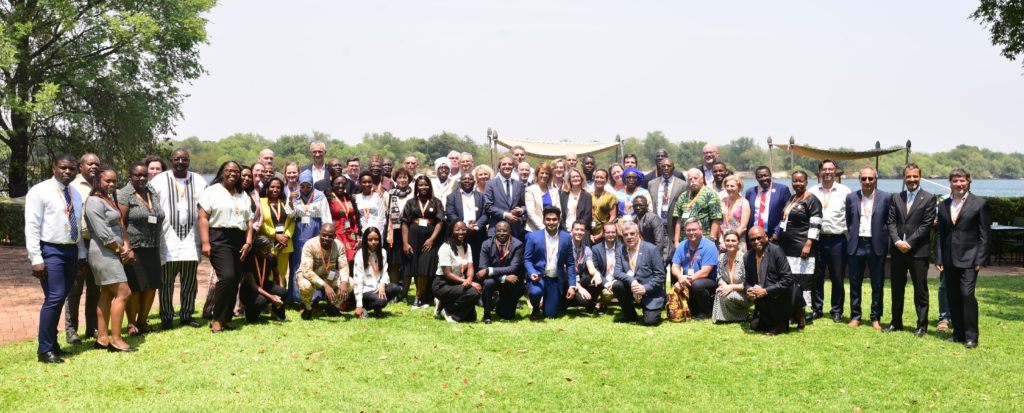
On 22 and 23 October 2024, the Republic of Zambia hosted the final meeting of the second phase of the PanAfGeo project in Livingstone. This meeting was an opportunity to review the results of this unique pan-African geosciences capacity-building project and based on cooperation between the African Union and the European Union.

PanAfGeo is a pan-African project co-funded by the European Union and a consortium of European geological surveys. The project involved two phases, the first between 2016 and 2019 and the second between 2021 and 2024. Overall, the project represents an investment of around €20 million. PanAfGeo is helping to strengthen collaboration between the associations of European geological surveys (EuroGeoSurveys) and African geological surveys (OAGS), as well as contributing to the Africa-EU partnership.

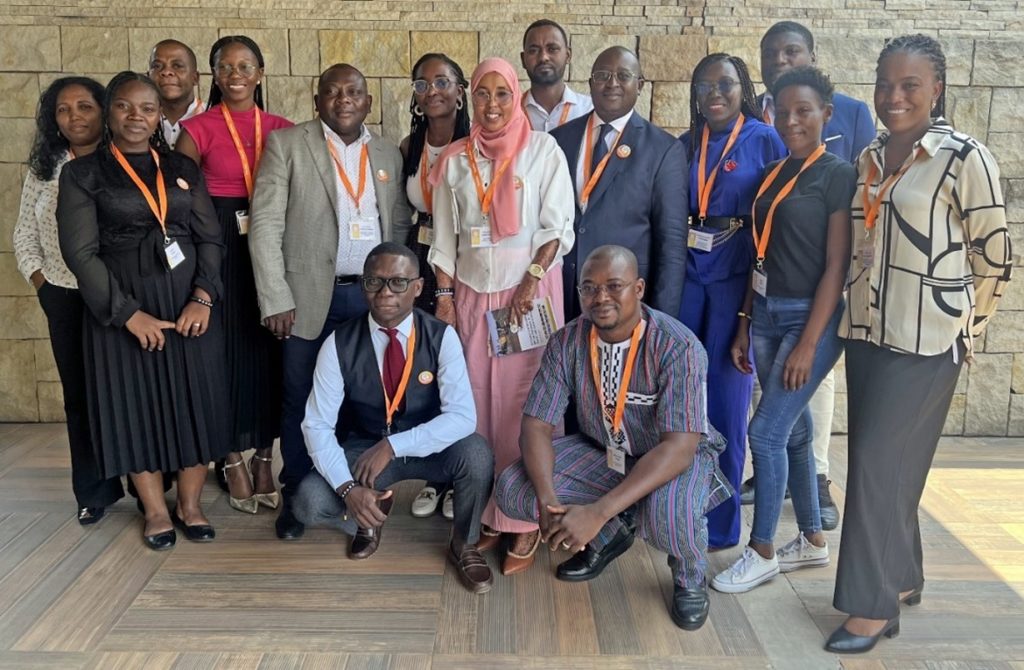
Bringing together some forty African and European nations, the meeting was attended by the Head of the European Union Delegation to Zambia, H.E. Ms Karolina Stasiak, the French Ambassador to Zambia, H.E. Mr Thomas Rossignol, the Director of the Zambian Geological Survey, Mr Gerald Mwila, the President of the Organisation of Geological Surveys of Africa (OAGS), Ms Rokhaya Samba Diene, the Secretary General of EuroGeoSurveys, Ms Julie Hollis, the Director of EuroGeoSurveys Secretariat, Ms Céline Andrien, and BRGM project coordinators, Mr Jean-Claude Guillaneau and Mr Nicolas Charles.

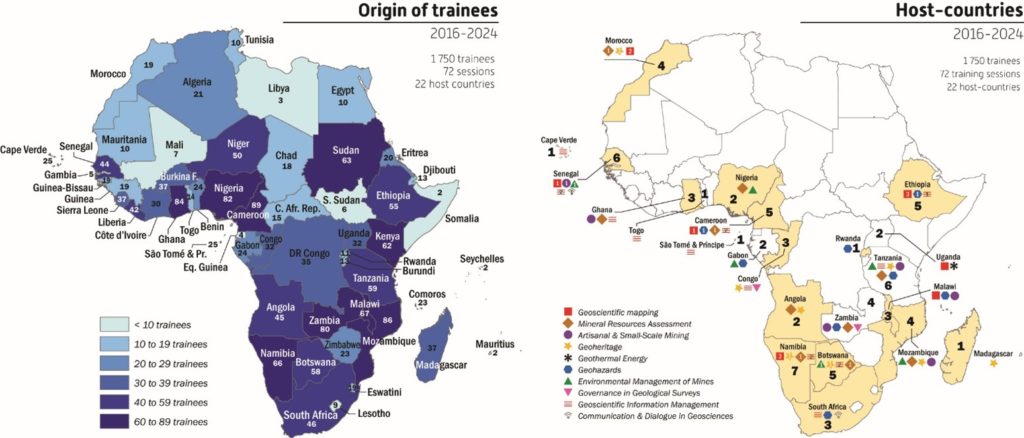
Between 2021 and 2024, PanAfGeo organised 30 training sessions in English, French and Portuguese, allowing 665 participants from 53 African geological surveys to study a range of topics: geoscientific mapping, mineral resources assessment, artisanal and small-scale mining, geoheritage, environmental management of mines, geohazards, geoscientific information management and, communication and dialogue in geoscience. The trainings were all organised in Africa, with the involvement of 17 host countries.

Almost 1,750 African geoscientists (60% men and 40% women) from 54 African countries were able to take part in PanAfGeo, organised in two phases between 2016 and 2024. A total of 22 African host countries hosted 72 training sessions. This is a unique result for a geosciences project on the African continent.

The meeting was an opportunity to present the results to project players and stakeholders in the form of oral presentations and posters for each of the technical components. One original aspect of this final meeting was that 16 former trainees from several African countries were invited to talk about their experience following their participation in PanAfGeo training sessions. Their input provided a practical illustration of the value and benefits of the project for African geological surveys.

Figure 1: Participants at the final meeting of the second phase of PanAfGeo, 22-23 October 2024 in Livingstone, Zambia 
Figure 2: Final results of the two phases of the PanAfGeo project (2016-2024) 
Figure 3: Former trainees invited to talk about their experience during phases 1 and 2 of PanAfGeo 

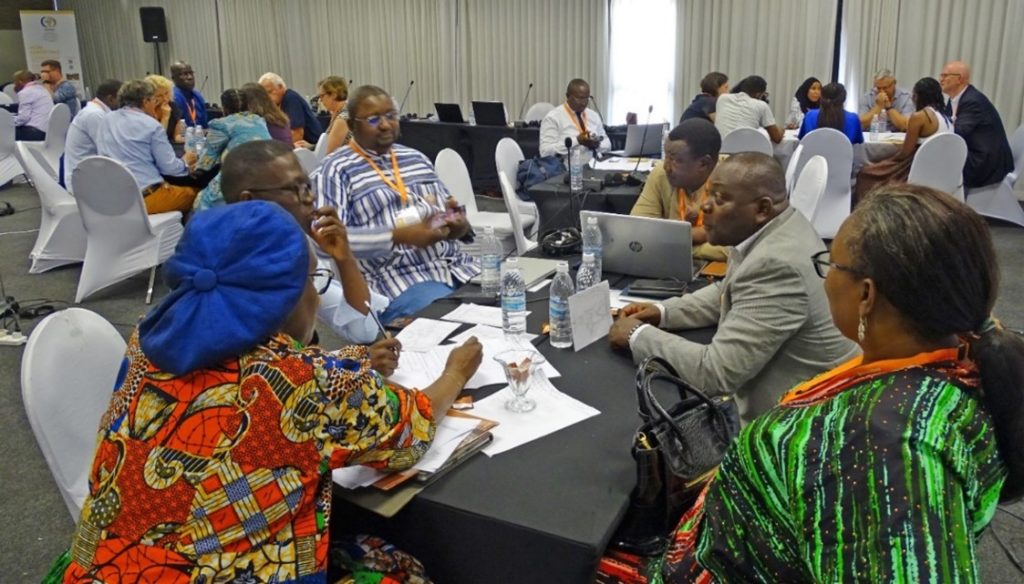
A workshop was also organised for European and African managers on the concept of governance within a geological survey, with the support of the Geological Survey of the Netherlands (TNO). Several working groups discussed the different governance models implemented by the European and African geological surveys present.

Figure 4: Workshop and working groups on governance in geological surveys in Europe and Africa 

Building on a success that is unanimously recognised by all the participants, including the independent African and European experts making up the Advisory Board, PanAfGeo is contributing to greater collaboration between Europe and Africa through their geological surveys. A network linking up the geoscientific community now exists on both continents.

Speaking on behalf of the European Union, the European scientific officer, Catherine Ghyoot announced plans to continue this initiative with funding for a new programme called “PanAfGeo+ / Support to Geosciences and Technologies” between 2025 and 2029. The network will be able to contribute to the sustainable management of geological resources in Africa and to promote the scientific and economic partnership between the EU and Africa in the field of geosciences and, more particularly, raw materials.

PanAfGeo+ will seek to:

  • Strengthen institutional partnerships between the EU and Africa in the geosciences field at continental, regional and national levels;
  • Continue to strengthen African geological surveys and OAGS through geoscientific intelligence and national, regional and continental support for policy-making and planning processes;
  • Promote economic partnerships between the EU and Africa for the value chains of critical raw materials, as initiated with the AfricaMaVal project.


About the PanAfGeo project

PanAfGeo is a pan-African project co-funded by the European Union and a consortium of European geological surveys. Launched in 2016, it contributes to greater collaboration between the Association of European Geological Surveys (EuroGeoSurveys) and the Organisation of the African Geological Surveys (OAGS) as well as to the Africa-EU partnership. Through this project, participants are able to acquire practical tools, methods and knowledge in several geoscientific fields (geoscientific mapping, mineral resources assessment, artisanal and small-scale mining, geohazards, environmental management of mines, geoheritage, geoscientific information management, communication and dissemination). The project supports the training of staff in the African geological surveys, strengthening their skills and knowledge.

Watch the video of the PanAfGeo Project, here.

Successful PanAfGeo Training on Mineral Resources Concludes in Morocco

From September 23 to October 4, 2024, the Kingdom of Morocco hosted an international training session in Ouarzazate and Tinghir as part of the PanAfGeo project. The session, focusing on “Mineral Resources Assessment,” was organized in collaboration with the Geological Surveys of Morocco, Portugal (LNEG), France (BRGM), Poland (PGI-NRI), and Nigeria (NGSA), with support from the European Union and EuroGeoSurveys.

The event welcomed 19 geoscientists from 14 French-speaking African nations, who engaged in both theoretical discussions and field visits, including trips to the Imiter silver mine and a semi-artisanal barite mine. The training explored key challenges and opportunities in mineral resource exploration, governance, and sustainable development.

The closing ceremony was held on October 4, where participants received certificates of completion. This initiative reinforces the collaboration between European and African geological surveys, aiming to strengthen expertise across the continent.

Choose the respective language to access the press release: French (PDF) ; English (PDF).

WP-D PanAfGeo Training Session on Geoheritage ‘New Frontiers in Geosciences’ Concluded in Botswana

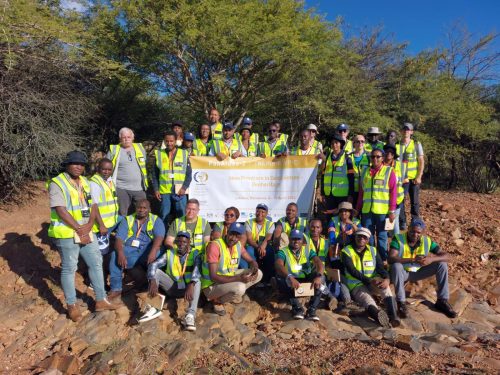
From 8 to 13 April 2024, PanAfGeo-2 training session ‘‘New Frontiers in Geosciences’’ (WP D), focusing on geoheritage, was held in Lobatse, Botswana. The session was co-organised by the Botswana Geoscience Institute (BGI) and geological surveys from Poland (PGI-NRI), France (BRGM), and Spain (IGME-CSIC), with strong support from UNESCO and the geological surveys of Italy (ISPRA) and Lithuania (LGT).

Approximately thirty participants from 16 African geological organisations attended the training, representing the following countries: South Africa, Botswana, Burundi, Egypt, Eswatini, Ethiopia, Ghana, Kenya, Liberia, Nigeria, Uganda, Rwanda, Sierra Leone, South Sudan, Tanzania, Zambia. The training combined indoor theoretical lessons with field activities to integrate to fully encompass the concepts of geodiversity, geoheritage, and geoconservation.

Furthermore, during the training session, UNESCO presented its actions and objectives for Africa through the International Geoscience and Geoparks Programme (IGCP), including the Global Geoparks label. The training served as a platform to introduce and discuss concepts such as geodiversity and geoheritage, covering their inventory, assessment, conservation in protected areas, and promotion strategies.

Click here to view/download the training session report.
The training session pictures are available here.

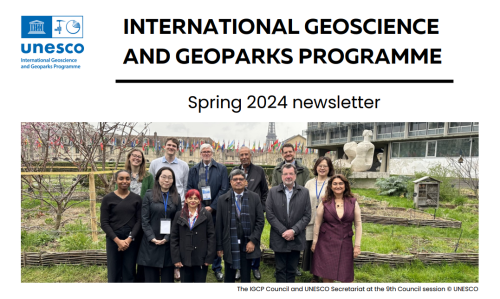
UNESCO’s International Geoscience and Geoparks Programme (IGCP) Council approved the plan for 2024

The 9th Session of the International Geoscience and Geoparks Programme (IGCP) Council was conducted from March 10 to March 12, 2024. The main themes were the assessment of the results of the ongoing projects and the budget distribution for 2024.

As a result, it was agreed to support 25 research projects in 2024 jointly financed by UNESCO and the International Union of Geological Sciences (IUGS). Furthermore, the Council approved to assist in carrying out another 8 projects but without funding. Overall, the IGCP plan for 2024 contains 33 active projects.

Also, the Council decided that to enhance the programme’s results they will revise the submission procedures and put Africa as the focus for the next 4 years.

There are several open calls, please find more information below:

Click here to view/download the spring 2024 IGCP newsletter.

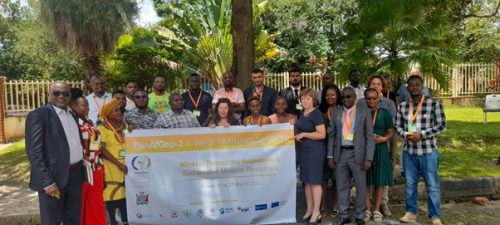
Effective Mineral Resources Assessment Training Session held in Zambia by PanAfGeo-2 WP-B

The PanAfGeo-2 project organised a training session on Mineral Resources assessment in Kitwe, Zambia. The training, held from 11-21 March 2024, was attended by 21 participants from 12 African English-speaking countries, namely Egypt, Tanzania, Zambia, Zimbabwe, Ghana, Botswana, Kenya, Eswatini, Libya, Malawi, Nigeria, and Liberia.

It was the third training session of the Work Package dedicated to Mineral Resources Assessment (WP-B). The ten-day training combined classroom-type sessions, lectures, practical lessons, and field trips to explore mines on-site. The theoretical lectures and practical lessons dealt with a variety of different topics with mineral resources assessment as a general theme. Additionally, the topics included economic aspects such as circular economy or the market for raw materials. During the visits to Nkana and Mufulira Cu-Co mines, trainees received on-site explanations about mineralisations and extraction methods and observed mining in action.

The training session garnered significant media attention, which you can explore further, here

To read the full report of the training session (PDF), click here.

PanAfGeo-2 Elevates Geoscience Collaboration at Mining Indaba 2024

PanAfGeo-2 seized the spotlight at Mining Indaba 2024, leaving a significant mark at the EuroGeoSurveys (EGS) and the French Geological Survey (BRGM) stands within the Team Europe booth (T36 & T38) from 5th to 8th February 2024.

Mining Indaba commenced with an inaugural address by South African President Cyril Ramaphosa, setting the stage for insightful discussions. Later in the afternoon, PanAfGeo-2 delivered a presentation on the topic ‘Pan-African/EU projects in Geosciences and Critical Minerals: PanAfGeo Project Phase-2 and AfricaMaVal’. Representatives from PanAfGeo-2 and various stakeholders shared insights into their innovative initiatives. Following the presentation, PanAfGeo-2 participated in a seminar focusing on investing in the South African mining sector value chain. Continuous meetings, side discussions, and interactions with the EU team and EU Delegation in South Africa further enriched the exchange of ideas.

PanAfGeo-2 maintained a constant presence and dialogue with notable entities such as the Council for Geoscience, Geological Survey of Senegal, Ministry of Mines, Industry and Technological Development, Cameroon, and Geological Survey of Namibia booths.

On 6th February, an internal meeting convened to discuss the future path of the PanAfGeo Project and exchange ideas on its direction. Attended by representatives from the Organisation of African Geological Surveys (OAGS), the French Geological Survey (BRGM), Consortium members, and some PanAfGeo Advisory Board Members, with a special presence from the African Minerals Development Centre (AMDC), the session held significant importance in shaping the project’s evolution. The meeting commenced with an opening speech by Dr. Rokhaya Samba Diene, President of OAGS, who emphasised the significant collaboration between EGS and OAGS, as well as the pivotal role of PanAfGeo activities.

PanAfGeo also participated in three notable gatherings:

  • On 6th February, PanAfGeo participated in the Investing in Exploration Seminar, highlighted by an address from the Minister of Mineral Resources and Energy, Mr Gwede Mantashe.
  • On 7th February, PanAfGeo took part in the Namibian Country Showcase on Critical Raw Materials Development and Local Value Addition, focusing on the Namibian context.
  • Lastly, on 8th February, PanAfGeo contributed to the Workshop on Mobilising Public Funds to Promote Investments into Africa’s Strategic Metals Value Chains.

View the photo gallery capturing moments from Mining Indaba here.

Click here to view/download the press release (PDF).

Insights and Initiatives from the Geohazards & Environmental Management Training in Kigali, Rwanda

The Geohazards & Environmental Management of Mines (WP-E) training session, held in Kigali, Rwanda from November 20 to November 24, 2023, marked a significant milestone in addressing crucial aspects of geohazards and environmental management within the mining industry.

The training was conducted according to the planned scope and generated great interest among all participants. The trainees expressed satisfaction with the training contents, materials, field trip guides, and impeccable logistics, including the training venue and transport arrangements to and from the airport. In the concluding general discussions, each participant eagerly shared their impressions and outlined their plans for implementing the newly acquired knowledge upon return to work. Every participant received comprehensive training materials on USB sticks and Field trip books.

The training also triggered discussions within the RMB about establishing a unit dedicated to geohazards inventory and landslide susceptibility mapping, with the assistance of the PanAfGeo WP-E group.

The field trip guide in Rwanda is available here.

Click here to view/download the training session report.

The training session pictures are available here.

PanAfGeo-2 Training Session Strengthens Geoscientists’ Communication for African Geological Surveys

From November 1-3, 2023, the Republic of Senegal hosted international training in Dakar delivered through the PanAfGeo project on the theme “Communication, Dissemination and Dialogue in Geosciences”.

This training, under the patronage of H.E. Mr. Oumar SARR, Minister of Mines and Geology of the Republic of Senegal, was co-organised by the National Geological Survey of Senegal (SGNS), EGS, OAGS, the Geological Survey of France (BRGM) and the Council for Geoscience of South Africa (CGS).

The training, delivered in French, gave twenty geoscientists from 12 geological surveys* in French-speaking Africa the opportunity to familiarise themselves with different techniques in communication, dissemination and dialogue. The Geological Surveys acquire and manage geoscientific data to serve as decision-making support for states on numerous societal issues, such as the supply of mineral resources and water, or the understanding and mitigation of natural hazards. In order to do this, scientists must be able to communicate their knowledge to different audiences, whether decision-makers or other citizen.

The training was structured around theoretical sessions describing the major concepts of communication (oral, written, media, social media, targeted audiences, graphic charter, etc.). Interactive scenarios of practical cases promoted discussion between participants, and focused on several geoscientific themes that participants may be confronted with in their work situations (e.g. marine submersion, mining rush, earthquake, mining inventory). During these practical workshops, public information meetings were simulated to learn how to communicate to a large audience; as well as modelling crisis management meetings and press conferences, as well as public meetings with decision-makers to argue for the funding of projects.

The session was moderated by Mrs. Fatoumata DRAMÉ (SGNS), Ms. Agnès NOËL (BRGM), Dr. Nicolas CHARLES (BRGM), Mr. Krishnan SUBRAMANI (EGS), Ms. Céline ANDIREN (EGS) and Mr. Daniel SÁNCHEZ (EGS). Following the classroom training, an excursion was organised to the island of Gorée to meet the Gorée Institute, which supports for the island’s cultural activities. This was an opportunity for participants to witness their activities and, specifically, how they use communication and dialogue in working with citizens and stakeholders.

The pictures from the training session are available here.

Choose the respective language to access the press release: French (PDF) ; English (PDF).

https://business-hall.khm.gov.ua/ https://cnap.khm.gov.ua/ https://shevchenko.khm.gov.ua/ https://veteran.khm.gov.ua/ https://zonbox.pl/