PanAfGeo Logo
Calendar Icon
EU Emblem

Media Release | The PanAfGeo training – Environmental Management of Mines takes place in Abuja, Nigeria this April

« ENVIRONMENTAL MANAGEMENT OF MINES »

Abuja, NIGERIA 1-12 April 2019

Abuja, 04 April 2019

« Environmental Management of Mines », the fifth session of the 12 days training programme as part of the PanAfGeo WP4 holds in Abuja (Nigeria) from the 1st to 12th April 2019.
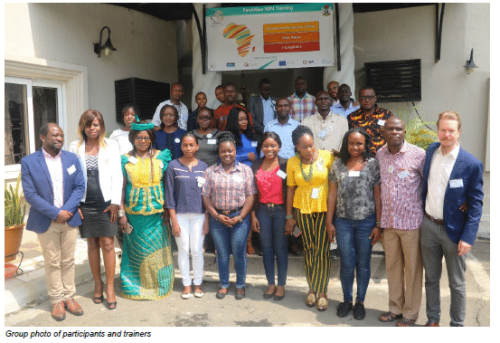
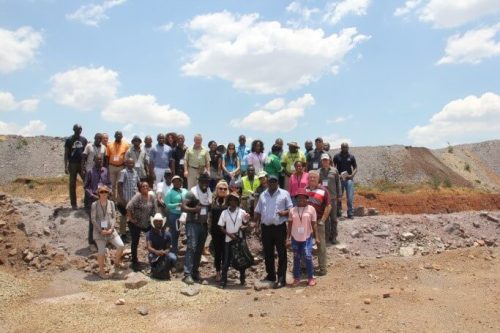
Group photo of participants and trainers 12 countries, 24 professionals from Nigeria, Niger, South Africa, Liberia, Sierra-Leone, Kenya, Democratic Republic of Congo, Burkina Faso, Sudan, South-Sudan, Cameroon and Madagascar. The training is co-organized by the Geological Survey of Sweden (SGU) and the Nigerian Geological Survey Agency (NGSA). The call for application for the training received more than 90 applications from staff of African geological surveys and mines departments. The selected candidates for the training represent several organizational units from the geological surveys to which they belong, and they have expertise including environmental specialists, mines inspectors, mining engineers and geologists.

The sessions are led by a team of professionals from Sweden, Denmark and Nigeria. Dr. John Tychsen,
(Denmark), Jonathan Hamisi and Pontus Westrin (Sweden) and Patrick Ojeka (Director of ASM
department, Nigeria).

Seminars on geosciences and environmental management of mines are combined to group discussions
and exercises. The main topic of the training focus on subject that are directly relevant during day to day
activity at work within geological surveys. How is environmental management part of the day-to-day work
of the participants? What are the opportunities and challenges? What legal frameworks, organizations,
collaborations and interactions are available or could be developed? All participants present their
organizations and a national review of environmental mine management in their respective countries.
Participants will assess environmental risks, management practices and organizational challenges.
Participants will analyze and illustrate the legal framework, organization and interactions of environmental
mine management in their country. Several examples of ongoing and closed mining projects will be
presented. Examples of rehabilitation, mine closures, public participation and stakeholder interaction in
mining projects will be assessed and discussed. The seminars, group exercises, field visits and discussions
will then be merged into a plan of action that each participant should take as a report message in their
respective geological department.

  • Some of the topics include:
  • The regional legal framework,
  • Rehabilitation and closure of mines,
  • Assessment of the environmental impact of mining activities,
  • Small-scale mining and the environment,
  • Acid Mine Drainage and Waste Management,
  • Hydrogeology, water and mines,
  • Mercury and cyanide in gold mines,
  • Public participation, sustainability and post-mining projects.

Media Release | The PanAfGeo Geological Training Project Continues in Tigray, N. Ethiopia

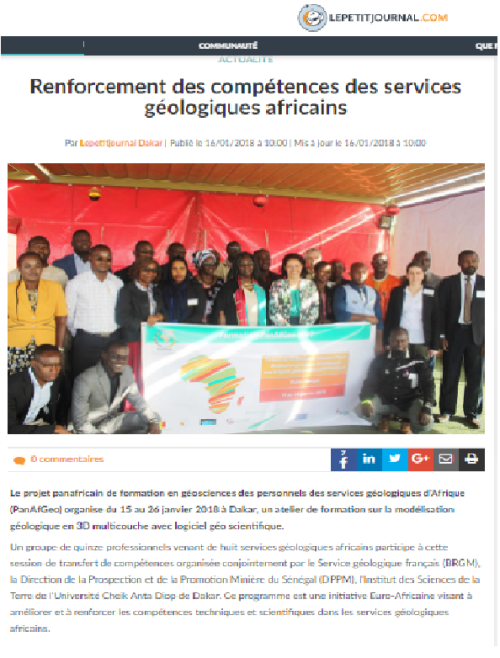
The International project PanAfGeo targetted at the practical improvement and capacity building for the staff of geological surveys of African countries, members of the Organization of African Geological Surveys. The programme supported by the European Union is launched in cooperation between the consortium of 12 European geological surveys and the African geological surveys. The training has been conducted in various African countries for over three years, to anchor the crucial practical skills in the field geological mapping. This year it is launched  in Tigray, Northern Ethiopia, from 4th February to 1st March, under the supervision and support by the Geological Survey of Ethiopia.

The final awarding of the participants´ certificates for trainees and the official closing ceremony is held at the Consolar Hotel in Axum on Friday 1 March, from 14.00 p.m.

The fifth round of training in “Field Geological Mapping” follows the introductory Remote Sensing E1 course and the first field mapping course E2 in Ethiopia held in 2017 and 2018. It is focused on the person to person intense teaching of the petrological, structural, instrumental and data processing methods leading to the construction of geological maps on different scales, of which the 1 : 25 000 was applied to the training. An important role in the mapping process is played by remote sensing and GIS approaches that are forming major part of the in-door training segments.

The training lasted for 25 days, comprised of in-door lectures, field excursions, demonstration, practice in instrumental methods, field mapping part, and final production of the map. The field part was conducted in small groups of trainees, each of them supervised by one expert from Czech Republic or Ethiopia. The training was coordinated by the Czech team and launched, thanks to the joint efforts of the experts from the Czech Geological Survey and the Geological Survey of Ethiopia, with support by local specialists from the Mekelle University and the Addis Ababa Science and Technology University. Twenty five trainees representing 13 different African countries (Benin, Cameroon, Comoros, Egypt, Ethiopia, Kenya, Botswana, Niger, Nigeria, Sierra Leone, Sudan, Tanzania, Zimbabwe) took part in the training, along with additional local participants from the Mining and Energy Agency of Tigray Region in Mekelle and Department of Geology, Axum University.

The crucial field parts were held in the Adwa area which has been selected as the field training site similiar to the  first field session last year. It was complemented by several excursions focused on dominant tectonic and volcanological features of the Danakil Depression and the methodical excursions organized around Mekelle and the wider Adwa and Axum areas. The Adwa area represents ideally exposed and geologically varied terrain that includes metamorphosed basement rocks, Palaeozoic sequences, Mesozoic sanstones, Tertiary flood basalts and the youngest trachyte plugs of the dominant Adwa Hills, and serves as an ideal training location. The theoretical, introductory and data processing sessions took place in Mekelle and Axum.

The PanAfGeo WP1 mappig programme continues in Senegal to be closed in Namibia later this year.

Geohazards of Africa – A summary of courses and activities performed by WP5 in Africa

Geohazards of Africa

Jonas Satkunas, leader WP 5 team

The aim of the Work Package Geohazards (WP5) of the PanAfGeo project is to organize theoretical and practical sessions on assessment, monitoring of geohazards (natural and anthropogenic) and prevention or mitigation of hazardous consequences. Participants of the courses are specialists of African geological surveys, trainers – geoscientists from Geological Surveys of Italy, Lithuania, Poland, Slovenia and South Africa.

The geohazards courses were organized in South Africa in 2017, in Tanzania and Zambia in 2018, and the fourth course is planned in Ethiopia in 2019. The three courses were attended by 91 participant from 29 African countries.

The courses not only provides presentation and transfer of knowledge and technologies available but also give an opportunity to learn about geohazards in Africa.
Investigations of geohazards however is not a priority task of many Geological Surveys Organisations (GSOs) of African countries so far. The Review of African Geological Survey Organisation Capacities and Gaps carried out by Economic Commission for Africa in 2018 shows shows that GSOs in Africa, in general, lack information on geological hazards. Eight African countries had an estimated 50 000 or more people affected by geological hazards (excluding floods) since 1900, consisting of: Algeria, Comoros, Democratic Republic of Congo, Egypt, Malawi, Morocco, Uganda and Somalia. Of these eight countries, only two (Democratic Republic of the Congo and Egypt) had GSOs with information on risks and hazards, while another five had information that might be useful for hazards research.
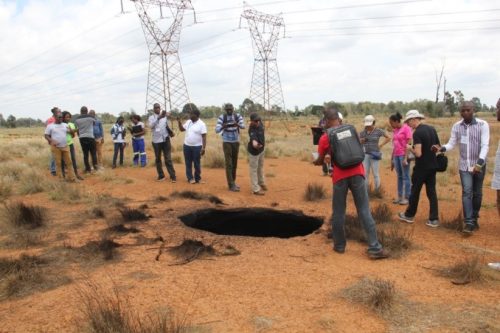
A vast range of geohazards in Africa is related with mining – contamination of environment by heavy metals, acid mine drainage, subsidence of surface, change of landscape etc.

In South Africa places mostly affected by mining activities are Witwatersrand goldfields and Witbank coalfields. The Witwatersrand has been mined for more than a century and this It is the world’s largest gold and uranium mining basin with the extraction, from more than 120 mines, of 43 500 t of gold in one century and 73 000 t of U between 1953 and 1995. In South Africa surface subsidence has caused severe damage to infrastructure (roads, dams, pipelines and buildings), alteration of hydrological pathways (high groundwater recharge, mine acid drainage).

The areas of Kitwe, Kabwe and many other places in Zambia are very much contaminated by heavy metals due to mining of copper, lead and zinc. Hazardous consequences of mining in Nigeria are distributed all over the country.

Report | PanAfGeo at Mining Indaba 2019: Cape Town, South Africa, 4-7 Feb 2019

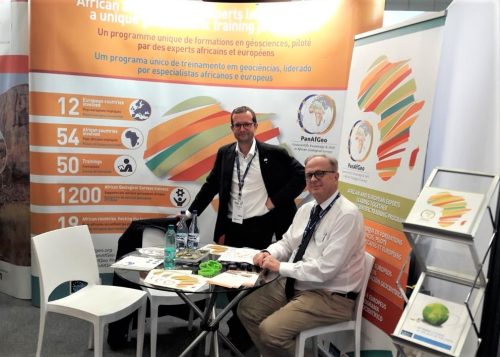
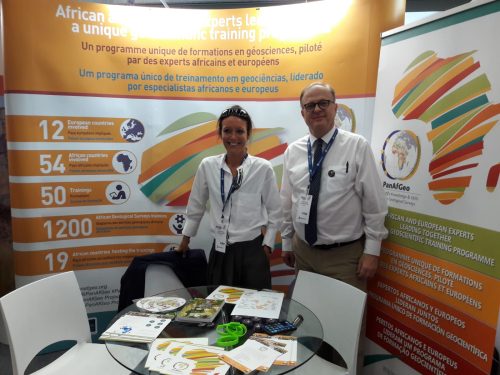
The PanAfGeo project renovated its participation to the Mining Indaba 2019 event, celebrating its success at the event for the 4th time since 2016. In addition, PanAfGeo showed active participation at the various events of the EU Delegation in South Africa for the duration of the week.

The Head of the EU Delegation for South Africa, several ambassadors (France, Ethiopia) and OAGS Directors (e.g. Senegal, Togo, Burkina Faso, Mauritania, Mozambique, DRC, Côte d’Ivoire) visited the PanAfGeo booth. Further, PanAfGeo would like to thank Mr. Sean Finlay, for arranging a productive discussion with the GSI and African Development Bank.

The PanAfGeo project participated in the following panel discussions:
• “The EU’s Normative Role in African Extractives Governance” presentation at SAIIA;
• “Mine Closure and Rehabilitation and the EU” of the Alternative Mining Indaba
• “Innovations in mine closure good practice guidance” panel of ICMM, IGF and the World Bank

The panel discussions were particularly relevant for PanAfGeo as it is aiming to strengthen skills of African geological surveys, to support governments to better develop sustainable and responsible mining activities.

PanAfGeo participation at Mining Indaba 2019

The PanAfGeo project is now taking part to the Mining Indaba event 2019! The event, happening this week from the 4th to 7th February will take place in Cape Town, South Africa, where the most influencing personalities working in the mining sector are expected to participate.

If you are interested in the African geology and want to know more about the sustainable use of African mineral resources and infrastructure, do not hesitate to visit the PanAfGeo booth number 515 at the Mining Indaba event!

Moreover, we seize the opportunity to present you our new post card available in both English and French.

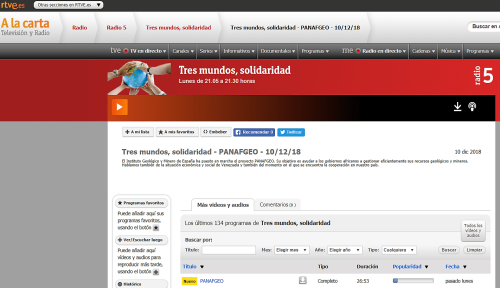
Interview of the PanAfGeo WP6 – Geoheritage leader in the Spanish national public radio

Significant media coverage for the PanAfGeo project through the interview of WP6 – Geoheritage leader, Dr Enrique Díaz-Martínez of Geological Survey of Spain-Instituto Geológico de España (IGME) being broadcasted in the channel 5 of Spanish national public radio (Radio 5).  The interview was aired on 10-12-2018.

The link to listen/download the audio file podcast: http://www.rtve.es/alacarta/audios/tres-mundos-solidaridad/tres-mundos-solidaridad-panafgeo-10-12-18/4883240/.

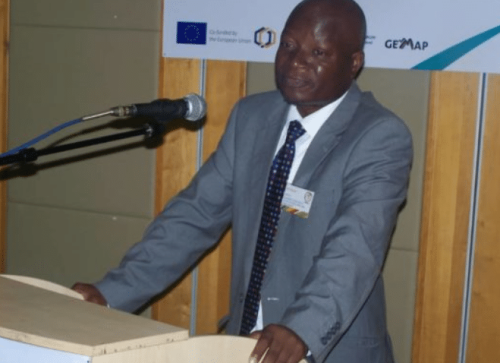
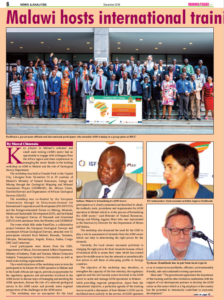
Significant National Media Coverage of the third Artisanal and Small-Scale Mining training in Lilongwe, Malawi (26 – 29 November 2018)

Third training in Artisanal and Small-Scale Mining is over with a significant media coverage:

  • Mining and Trade Review

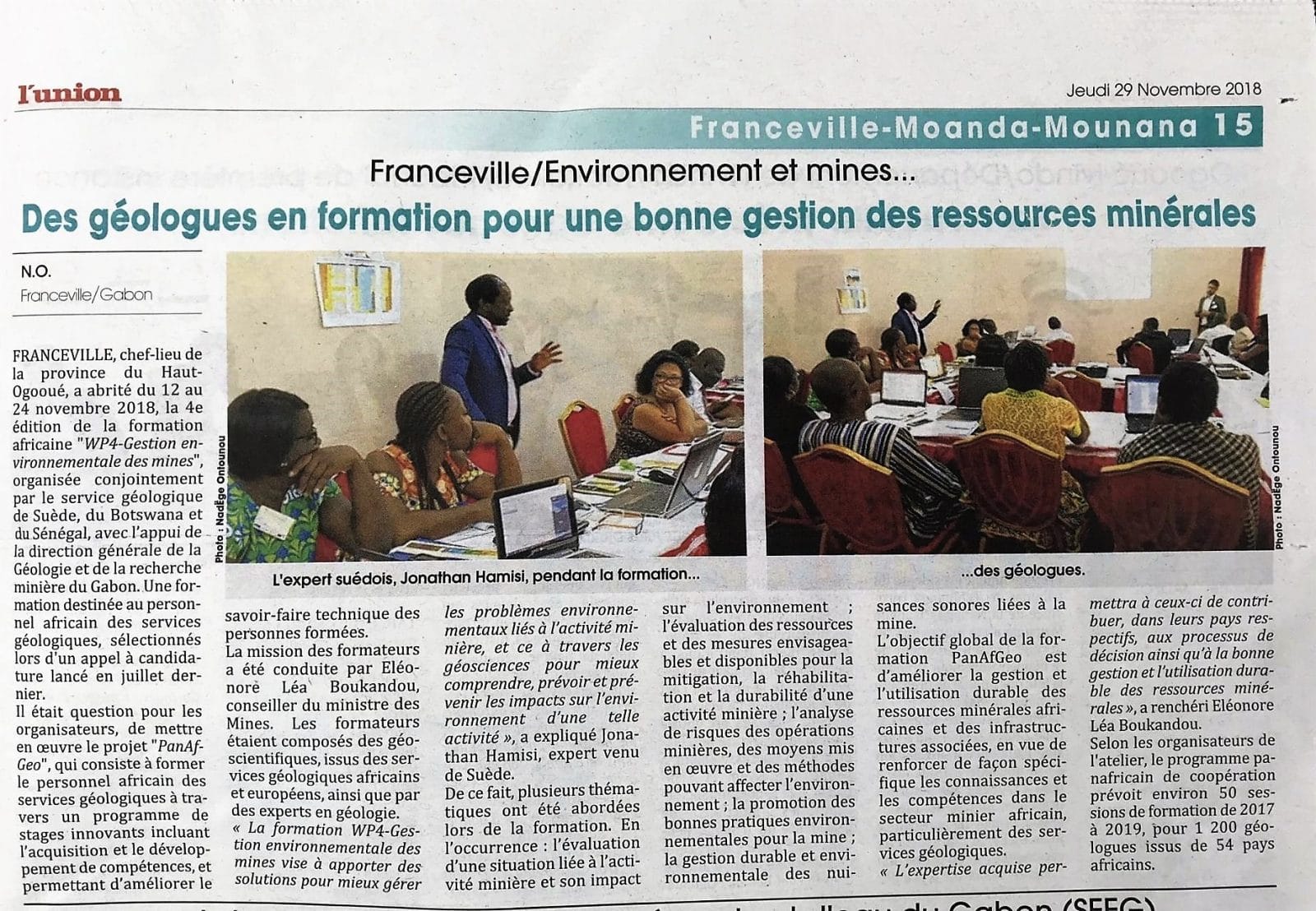
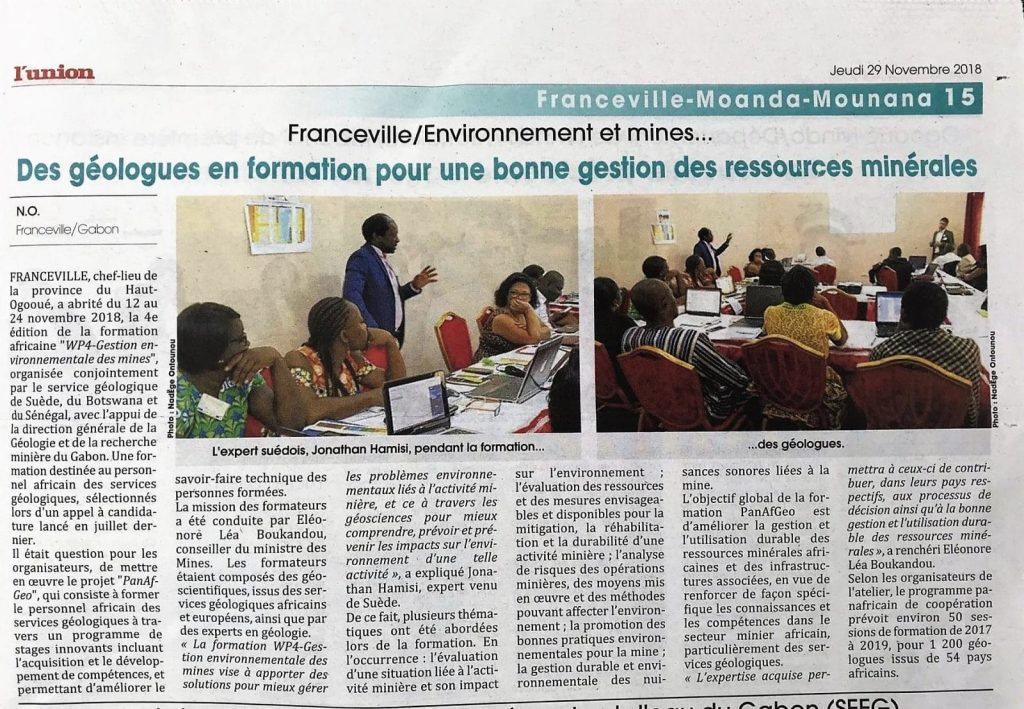
Environmental Management of Mines – Press coverage and report of WP4 S4, Franceville, Gabon – 12-24 Nov 2018

The fourth training session of the Environmental Management of Mines held in Franceville, Gabon received a crucial media coverage.

Day 1: Environmental Management of Mines training WP4-S4 in Franceville, Gabon – 12-24 Nov 2018

GESTION ENVIRONNEMENTALE DES MINES 
Franceville, GABON 12-24 Novembre 2018

Libreville, le 13 Novembre 2018
« Gestion Environnementale des Mines », un programme de formation de 12 jours dans le cadre du projet PanAfGeo WP4 se tiendra à Franceville (Gabon) du 12 au 24 Novembre 2018.

22 professionnels du Burkina Faso, de la République Démocratique du Congo, De la République du Congo, de la Cote d’Ivoire, du Cameroun, du Madagascar, du Bénin et du Gabon. La formation est organisée conjointement par Le Service Géologique de Suède et la Direction Générale de la Géologie et de la Recherche Minière (Gabon). La formation a reçu plus de 108 candidatures émanant du personnel des
services géologiques africains. Les candidats sélectionnés pour la formation représentent plusieurs unités organisationnelles différentes des services géologiques auxquelles ils appartiennent et ont des expertises variées comprenant des spécialistes de l’environnement, des ingénieurs des mines et des géologues.

Les séminaires et les sessions de formation seront animés par une équipe de professionnels du Gabon, notamment l’Administration, le staff technique de Comilog (Eramet), Noga Mining, Reminac ; le Dr. Seydou Keita (Mali), Serge Kayembe (R.D. Congo); Mattias Fackel et Jonathan Hamisi (tous de la Suède). Des séminaires sur les géosciences et la gestion de l’environnement sont intégrés tout au long de la
formation, de même que des exercices et analyses en groupe. Le thème de la formation est avant tout l’intégration des sujets traités sur les lieux de travail et dans les services géologiques. Comment la gestion de l’environnement fait-elle partie du travail quotidien des participants ? Quels sont les possibilités et les défis ? Quels cadres légaux, organisations, collaborations et interactions sont disponibles ou pourraient
être développés ? Tous les participants présenteront leurs organisations et un passage en revue nationale de la gestion environnementale des mines dans leur pays respectif.

Les participants évalueront les risques environnementaux, les pratiques de gestion et les défis organisationnels. Les participants analyseront et illustreront le cadre juridique, l’organisation et les interactions de la gestion environnementale des mines dans leur pays. Plusieurs exemples de projets miniers en cours seront présentés. Des exemples de réhabilitation, de fermeture de mines, de participation du public et d’interactions entre parties prenantes dans les projets miniers seront évalués et discutés. Les séminaires, les exercices de groupe, les visites sur le terrain et les discussions seront ensuite fusionnés en un plan d’actions que chaque participant devrait prendre comme message à rapporter dans leurs services géologiques respectifs.

Les sujets incluent entre autres :
• Le cadre juridique régional,
• La remise en état et fermeture des mines,
• L’évaluation de l’impact environnemental des activités minières,
• L’exploitation minière à petite échelle et l’environnement,
• Le Drainage Minier Acide et gestion des déchets,
• L’hydrogéologie, eau et mines,
• Le mercure et le cyanure dans les mines d’or,
• La participation du public, durabilité et projets post-miniers.

Les visites de sites conduiront les participants sur des sites d’exploitation minières d’Or, de Manganèse et de Fer (le fer n’est pas encore exploité). Nous remercions à l’avance les directions et le personnel des opérateurs miniers du Gabon, à savoir NoGa Mining, Comilog et Reminac pour leur hospitalité et pour le partage de leurs expériences en matière de gestion environnementale des mines et comment celles-ci sont mises en oeuvre dans leurs opérations.

Avant tout, et probablement le résultat attendu le plus important de la formation est la manière dont les participants et la solide équipe de formateurs de la région renforceront ensemble un réseau professionnel important et, éventuellement, en créent de nouveaux. L’interaction et le partage des expériences tirées des activités minières, de la gestion de l’environnement et des principes de gouvernance sont extrêmement
précieux. Les contacts établis entre les participants et entre les participants et les formateurs experts constituent une contribution importante et durable de la formation. Plusieurs formes de solutions de communication basées sur Internet seront mises en place, à la fois pour la région et pour le nombre croissant de participants aux formations qui suivent. Quelques outils et méthodes de base pour le travail
sur le terrain et la documentation seront introduits et seront étendus à l’avenir dans les prochaines formations.

La formation était organisée par Jonathan Hamisi, chef de projet adjoint (Suède), Mattias Fackel, Coordonnateur du programme de formation (Suède) et par le point Focal au Gabon du PanAfGeo WP4, Eleonore Boukandou et Francis Mayaga-Mikolo (Direction Générale de la Géologie et de la Recherche Minière du Gabon). La réussite de la préparation de la session de formation a été rendue possible grâce au travail du point focal qui a soutenu la formation de la meilleure façon possible. Le programme de formation « Gestion environnementale des mines » est cofinancé par le Forum intergouvernemental sur les mines, les minéraux et le développement durable (IGF).

Formations à venir :
À l’occasion de cette quatrième session de formation qui se tient en Français, plus de 108 candidatures ont été reçues, indiquant un intérêt profond pour le sujet et la nécessité d’accroître ces compétences. Le Work Package PanAfGeo 4 (WP4) « Gestion environnementale des mines» sera proposé dans 2 autres pays en Afrique en 2019. L’un d’entre eux se déroulera en anglais, et l’autre éventuellement en portugais.
La prochaine formation aura lieu au Nigeria en Mars 2019. Consultez le site Web de PanAfGeo pour obtenir des informations à jour et les procédures de candidature.

Report of Geohazards training session WP5-3: Ndola, Zambia, 4-12 Nov 2018

Geohazards

Session WP5-3: Ndola, Zambia

4 to 12 November 2018

Brief description of the course content and visited places

30 professionals from 9 African countries (Sudan, Kenya, South Africa, Benin, Lesotho, Cameroon, Nigeria, Equatorial Guinea and Zambia) took part in this training. It was jointly organised by Coordinator and co-coordinator of the WP5 with assistance Dr Desiderius Chapewa, Geological Survey Department – Zambia and Mrs Gertrude Mundia, local consultant.

More than 80 applications have been received from Geological Survey Organisations throughout Africa. This training was organised as classroom type sessions including practical desk top exercises and field trainings. Lectures on various geohazards were given by highly qualified specialists from Geological Surveys of Lithuania, Poland, Slovenia, Italy and South Africa. Very successful was session on introduction of trainees – experiences, problems and expectations dealing with geohazards in their countries. It is noteworthy that opening address was given by Mr Paul Chanda, Permanent Secretary for the Ministry of Mines, Zambia, who emphasized the value of the course for strenghtening of geohazards studies in Zambia.

During the course, lectures and presentations of case studies were given covering the following geohazards: landslides, geopollution, erosion/desertification, land subsidence, hydrogeohazards (including flooding), seismic and volcanic hazards (the programme attached). All trainees were supplied with printed lecture copies and USB units including all lecture presentations and other useful material and software.

Field training encompassed studies of slope stability and geotechnical properties of rocks, sampling of contaminated soils and water from Kafue river, preparation of samples of soil for sending to laboratory, observations of contaminated groundwater by copper sulphides in the site for development in Kitwe, land subsidence processes due to underground mining (Mopani mine) and karst (Chilengwa Na Lesa lake), contamination of environment by dust from quarries (Ndola limestone) and tailing dams (Bwana Mkubwa open mine, Black mountain in Kitwe and Mopani mine), geohazards related with artisanal mining of copper and other aspects.

The attendance of the course was 100 percent and certificates of attendance were presented to all trainees.

A feedback from all participants was received in the form of filled questionnaires. All responses were positive, except one and a number of suggestions and constructive remarks were provided (more field visits, longer course etc.). Site visits became possible thanks to Mr Paul Chanda, Permanent Secretary for the Ministry of Mines, Zambia and Chief Chiwala.

https://business-hall.khm.gov.ua/ https://cnap.khm.gov.ua/ https://shevchenko.khm.gov.ua/ https://veteran.khm.gov.ua/ https://zonbox.pl/