PanAfGeo Logo
Calendar Icon
EU Emblem

The first call for Panafgeo training in geoheritage has been published

Call for application
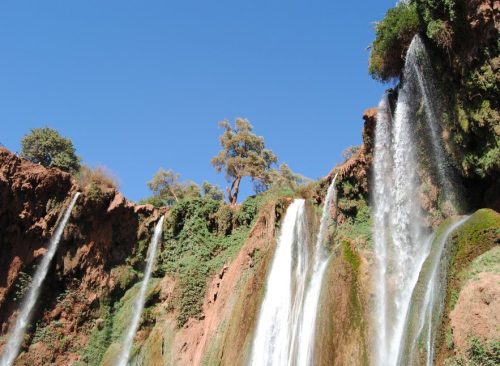
TRAINING: WP6 – Geoheritage


PanAfGeo WP6 will organize altogether five (5) training sessions on Geoheritage across Africa during 2017-2019. Three (3) sessions will be run in English, one (1) in French, and one (1) in Portuguese (depending on the number of Portuguese speaking applicants).
The WP6 trainings will take place in Morocco in late October-early November, and after this there will be four (4) more sessions to come in 2018 and 2019.

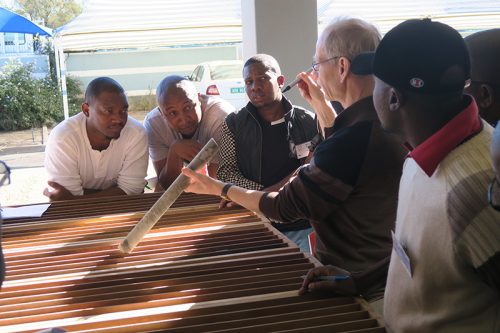
This first training of WP6 – Geoheritage will provide or increase the basic background knowledge and skills of African staff regarding the tasks of geological surveys in geoconservation.

The PanAfGeo WP6 Geoheritage training session is supported through funds of the European Commission. The following expenses will be covered for each trainee:
– Travel costs: flight and ground travel in Africa, according to the programme of the training.
– Lodging and joint meals during the training session.
– A daily training allowance of 30 euro.

FIRST TRAINING SESSION:
From 30 October to 4 November 2017
MARRAKECH, MOROCCO
APPLICATION DEADLINE: 20 August 2017

DOWNLOAD: Call for applications PanAfGeo – WP6 Geoheritage
In order to be considered, applicants for the PanAfGeo Training Session entitled “WP6 Geoheritage” must complete the documents listed hereafter:
o Letter of Commitment
o Letter of Motivation
o Applicant Form
o PanAfGeo Charter

Please complete these documents and send them by email to: Ms Furaha Anzuluni: fanzuluni@geoscience.org.za and to WP6 Leader Enrique DÍAZ-MARTÍNEZ (IGME) e.diaz@igme.es, WP6 Co-Leader Djimadoum NAMBATINGAR (S.G. du Tchad) nambating@gmail.com, and WP6 Deputy Co-Leader Ahmed BENLAKHDIM (DG-MEM, Maroc) a.benlakhdim@mem.gov.ma before the application deadline of 20 August 2017.

PanAfGeo: a step forward towards improving governance of the mining sector

Brussels, 19 May 2017

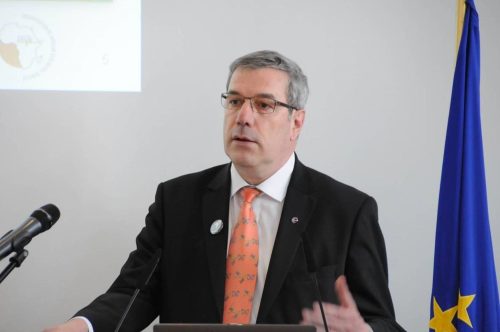
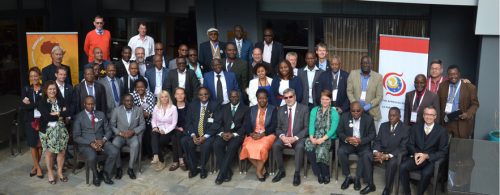
PanAfGeo, the innovative geological training programme for Africa was launched last 11-12 May 2017 in Windhoek, Namibia, in the presence of numerous national and international dignitaries, including Hon. K. Shilunga (Deputy Minister of Mines and Energy)  Mr. Negumbo (Permanent Secretary of Ministry Mines and Energy), H.E. Jana Hybaskova (Head of EU Delegation, EU Ambassador to Namibia),  H.E. Jacqueline Bassa-Mazzoni (French Ambassador to Namibia), Mr. F. Dixon Mugyenyi (African Union Commission), Zdenka Dobiasova (European Commission) and several African Geological Survey Directors.

The Organisation of African Geological Surveys (OAGS) in partnership with EuroGeoSurveys, the Geological Surveys of Europe (EGS), will provide about 50 training sessions for more than 1,200 geologists coming from 54 African countries. The project will provide human resources capacity building and training for African Geological Surveys staff. This programme of 10.3 million euros is co-funded by the European Union through its Directorate-General for International Cooperation and Development (DG DEVCO) and a consortium of 12 European Geological Surveys, led by BRGM (the French Geological Survey).

Hon. K. Shilunga, recognized the fundamental role of the OAGS in resolving many of the important issues the world is facing today, such as the development of African mineral resources, the participation in the value chain in order to help industrialise African countries, and improving the standard of living of the African people: “this  close cooperation between African and European Geological Surveys, with the support of several high-level partners such as the European Commission, African Union Commission, African Minerals Development Centre (AMDC), African Minerals and Geosciences Centre (AMGC) and the Geological Society of Africa, is a milestone toward sustainable development of the global economy”. H.E. J. Hybaskova also pointed out the importance of collecting information and the capacity to manage the data are crucial for the benefit of the society.

The strategic importance of the above collaboration, in the areas of governance of natural resources, sustainable exploitation of non-energy mineral resources, prevention and mitigation of natural and man-made disasters and support to the development of artisanal/small scale mining, has been highlighted by Mr. I. Mba Okorie –Deputy Director Nigerian Geological Survey Agency representing Mr. A. Nwegbu, President of OAGS – who said “it is an opportunity to exchange ideas, inspire new research and to establish a solid basis for the development of geosciences in Africa and all over the world”. PanAfGeo allows trainees to acquire a state-of-the-art tool kit, methods and the possibility to take part in field trips concerning eight geoscientific domains: Geoscientific Mapping, Mineral Resources Assessment, Artisanal and Small-Scale Mining, Environmental Management of Mines, Geohazards, Geoheritage, Geoinformation Management, and Communication and Promotion.

The first training on “MINERAL RESOURCES ASSESSMENT” will be held from 5 June 2017 to 16 June 2017 in Windhoek, Namibia. Bruxelles, le 19 Mai 2017

PanAfGeo est un programme innovant de formation en géosciences en Afrique, lancé les 11 et 12 mai 2017 à Windhoek en Namibie, en la présence de nombreux dignitaires namibiens et internationaux, comme l’Honorable K. Shilunga (Ministre-adjointe des mines et de l’énergie), M. Negumbo (Secrétaire permanent du Ministère des mines et de l’énergie), S.E. Jana Hybaskova (Chef de la délégation de l’Union Européenne et Ambassadeur de l’UE en Namibie),  S.E. Jacqueline Bassa-Mazzoni (Ambassadeur de France en Namibie), M. F. Dixon Mugyenyi (Commission de l’Union Africaine), Zdenka Dobiasova (Commission Européenne) et plusieurs directeurs de services géologiques africains.

L’Organisation des Services Géologiques d’Afrique (OAGS) en partenariat avec son homologue européen EuroGeoSurveys (EGS), organiseront près de 50 stages de formation pour environ 1 200 géologues issus des 54 pays d’Afrique. Le projet permettra d’améliorer les compétences techniques et scientifiques des personnels des Services géologique africains. Ce programme de 10,3 millions d’euros est cofinancé par l’Union Européenne via sa Direction Générale de la Coopération Internationale et du Développement (DG-DEVCO) et un consortium de 12 services géologiques européens piloté par le BRGM (Service géologique français).

L’Honorable K. Shilunga a rappelé le rôle fondamental de l’OAGS à résoudre certains enjeux planétaires actuels, comme le développement du secteur minier en Afrique, la participation à la chaîne de valeur pour favoriser l’industrialisation des pays africains, et améliorer la qualité de vie des personnes vivant en Afrique : « cette étroite collaboration entre services géologiques africains et européens, avec  le soutien de partenaires de haut-rang comme l’Union Européenne, l’Union Africaine, le Centre Africain du Développement Minéral (AMDC), le Centre Africain des Minéraux et des Géosciences (AMGC), et la Société Géologique d’Afrique (GSAf), est une étape décisive vers le développement durable d’une économie globale ». S.E. J. Hybaskova a également pointé l’importance d’acquérir de nouvelles données et que leur bonne gestion était cruciale pour pouvoir en faire bénéficier la Société.

L’importance stratégique d’une telle collaboration pour la gouvernance des ressources minérales, l’exploitation durable des ressources non-énergétiques, la prévention et l’atténuation des catastrophes naturelles et humaines ainsi que le soutien au développement de la mine artisanale a été soulignée par M. I. Mba Okorie (Directeur-adjoint au Service géologique du Nigéria) représentant M. A. Nwegbu (Président de l’OAGS) : « c’est une opportunité d’échanger des idées, de favoriser de nouvelles pistes de recherches et d’établir une base solide pour le développement des géosciences en Afrique et dans le reste du monde ». PanAfGeo permet aux stagiaires d’acquérir un état de l’art, des méthodes et la possibilité de faire du terrain dans 8 domaines des géosciences : cartographie géoscientifique, inventaire du potentiel minier, mine artisanale, gestion environnementale des mines, risques naturels, patrimoine géologique, gestion des données géoscientifiques, communication et promotion.

La première formation sur le « Potentiel minier » aura lieu du 5 au 16 juin 2017 à Windhoek, en Namibie.

The first calls for panafgeo trainings in geoscientific information management have been published

The first Calls for Applications for PanAfGeo trainings organized by Work Package 7 have now been published. The WP7 will organise altogether nine (9) training sessions in Geoscientific Information Management across Africa during 2017-2019, organized in three (3) independent modules:

  • WP7-A: Database management, handling of spatial data and GIS interface;
  • WP7-B: Spatial data infrastructure – Data modelling – Interoperability standards – Data dissemination;
  • WP7-C: Multilayer 3D geological modelling using dedicated geoscience software.

So far, the following Calls for Applications have been published:

FIRST TRAINING SESSION MODULE A:
20 November-1st December 2017 | Accra, Ghana (in English)
APPLICATION DEADLINE: 31 JULY 2017


FIRST TRAINING SESSION MODULE B:
16-27 October 2017 | Dar Es Salaam, Tanzania (in English)
APPLICATION DEADLINE: 30 JUNE 2017


FIRST TRAINING SESSION MODULE C:
15-26 January 2018 | Dakar, Senegal (in French)
APPLICATION DEADLINE: 30 September 2017


Do not miss the occasion to join this exciting training programme and get in touch with leading geoscientific experts from Europe and Africa.

1ST TRAINING « WP7 – Geoscientific information Management » in Tanzania

1ST TRAINING « WP7 – Geoscientific information Management » in Tanzania

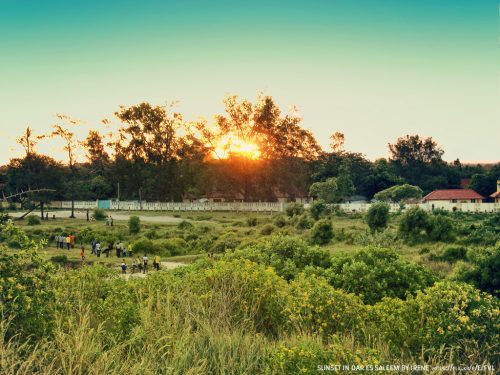
The first training session of WP7- Geoscientific information Management will be held in Dar Es Salaam, Tanzania from 16-27 October 2017. The module of the training is WP7-B Spatial data infrastructure – Data modelling – Interoperability standards – Data dissemination.

European Commission Lunchtime conference: PanAfGeo- an unprecedented pan-African training programme

nfoPoint Lunchtime conference:

PanAfGeo: an unprecedented pan-African training programme

On the 31st March 2017 the European Commission DG DEVCO (Development and Cooperation) hosted the conference “PanAfGeo: an unprecedented pan-African training programme” at the External Cooperation INFOPOINT. The Conference was opened by Ms Dobiasova, External Cooperation Officer at DG DEVCO, who presented the importance of the PanAfGeo project in the more global context of Africa-EU partnership.  PanAfGeo is co-funded under the Pan-African Programme, the main EU financial instrument supporting projects at continental level. The innovation represented by the Pan-African Programme is in the spirit of cooperation, looking at win-win projects strengthening both continents, such PanAfGeo.

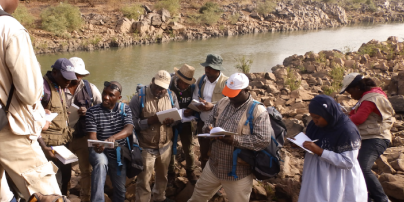
Mr Jean-Claude Guillaneau, PanAfGeo Coordinator from the French Geological Survey (BRGM), introduced the PanAfGeo programme and explained all its unique features. PanAfGeo required 4 years of preparation, from a feasibility study to a complete, innovative training programme in geosciences covering 54 African countries. The programme is led by European and African Geological Surveys, and therefore combines the variety of European Surveys to the variety of African Surveys, making this an unique training offer. The African geologists that will be attending the PanAfGeo trainings will also have the possibility, in several cases, to experience field work. This is a remarkable added value of the programme as often the Surveys do not have the necessary equipment or resources to go in the field, although this is a fundamental aspect of the job. PanAfGeo will cover all costs of the trainees, from the travel to hotel expenses.

The project will empower the Organization of the African Geological Surveys (OAGS) and it is expected to make a difference in mineral resources governance. This is one of the reasons the African Mining Vision (AMV) gave full support to PanAfGeo at the 35th International Geological Congress held in Cape Town in 2016, as well as other international partners such as UNECA, UNESCO, UNDP.

WATCH THE FULL CONFERENCE HERE

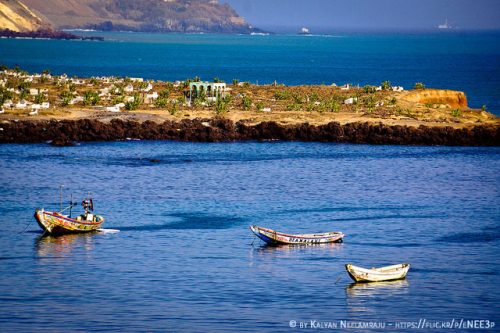
1st Training in “Environmental Management Of Mines” in Senegal

1ST TRAINING IN ENVIRONMENTAL MANAGEMENT OF MINES IN SENEGAL
The first training session of WP4-“Environmental Management of Mines” will be held from 3 to 14 July 2017 in Dakar, Senegal. The application deadline is 15 April 2017.
1er STAGE DE « GESTION ENVIRONNEMENTALE DES MINES » IN SENEGAL
Le primier stage « WP4 – Gestion environnementale des mines » aura lieu du 3 au 14 Juillet in Dakar, Senegal. La date limite de candidature est le 15 Avril 2017.

PanAfGeo 1st Training in Mineral Resources Assessment launched

he ambitious training programme of the PanAfGeo Project is now a reality. The first training of “WP2 – MINERAL RESOURCES ASSESSMENT” will be held from 5 June 2017 to 16 June 2017 in Windhoek, Namibia. PanAfGeo WP2 will organise seven training sessions in “Mineral Resources Assessment” across Africa during 2017-2019, some of which will be held in English, French and possibly Portuguese. The second Training session will take place in Nigeria in November 2017.

– Application Deadline: 7 April

BACKGROUND

“PanAfGeo” for “Pan-African Support to the EuroGeoSurveys-Organisation of African Geological Surveys (EGS-OAGS) Partnership” is a project which supports the training of geoscientific staff from African Geological Surveys through the development of an innovative training programme that includes the acquisition and development of important professional skills that complement their qualifications and technical skills. The training programme is carried out by world-class geoscientific experts coming from African and European Geological Surveys.

PanAfGeo is co-funded by the European Commission (Directorate-General of Development and International Cooperation) and by a Consortium of 12 European Geological Surveys coordinated by the French Geological Survey (BRGM).[:fr]L’ambitieux programme de formation du PanAfGeo est devenu réalité. La première formation « WP2 – Inventaire du potentiel en ressources minérales » aura lieu du 5 au 16 Juin à Windhoek, en Namibie. Le PanAfGeo organisera sept sessions de formations portant sur l’ « Inventaire du potentiel en ressources minérales » à travers toute l’Afrique entre 2017 et 2019, principalement en Anglais, Français et Portugais. La deuxième session de formations aura lieu au Nigeria en Novembre 2017.

– Date limite de candidature: 7 April

« PanAfGeo » pour “Pan-African Support to the EuroGeoSurveys-Organisation of African Geological Surveys (EGS-OAGS) Partnership” est un projet de formation des personnels des services géologiques africains à travers un programme de stages innovants qui inclut l’acquisition et le développement de compétences qui permettra d’améliorer le savoir-faire technique des personnes formées. Le programme de formations sera piloté par des géoscientifiques hautement qualifiés issus des services géologiques africains et européens.

PanAfGeo est cofinancé par l’Union Européenne (Direction Générale au Développement et à la Coopération Internationale) et par un Consortium de 12 services géologiques européens coordonné par le service géologique français (BRGM).

PanAfGeo for boosting geoscientific skills in Africa

The Geoscientific Knowledge and Skills in African Geological Surveys (PanAfGeo) Project, presented last 29th August in Cape Town, South Africa, during the 35th International Geological Congress (IGC35), has attracted more than 200 participants, mainly from African Countries. The project’s aim, in fact, is to organise a series of effective and impacting trainings for the staff of the African geological administrations in the field of remote sensing and geoscientific mapping, mineral resources assessment, environmental management of mines, artisanal and small-scale mining, geoscience information management, geohazards monitoring and geoheritage valorization.

Mr. Mosebenzi Joseph Zwane, Minister of Mineral Resources of the Republic of South Africa, opened the symposium, highlighting the full support of his ministry for such initiative. Stronger administrations, means more and better information, less bureaucracy and more transparency in the administrative steps, that translates into more investment attractiveness. Also raw materials trade is important, as countries would benefit of the synergies and commerce with relatively wealthy neighbouring ones.

A similarly strong same support came from Mr Frank Mugyenyi, Senior Industry Advisor to African Union Commissioner Acyl, who sees in the Organisation of African Geological Surveys an ideal partner for developing more conscious decision making procedures, in terms of economic and infrastructure development, and encourage entrepreneurial activities.
Mr Verbruggen, President of EuroGeoSurveys, expressed satisfaction for having reached this milestone, after so many months of joint effort, but reminded that the real challenge is starting now and that huge expectations lie behind this project. However the premises are great, especially because a good start is half the job.

Stronger Geological Surveys mean stronger local industries and more investments from abroad, is what has been recognised by all the stakeholders invited at the panel discussion, such as Mr. Marcus Cornaro, European Union Ambassador to the Republic of South Africa, Ms. Barbara Ryan, Director of the Group on Earth Observation (GEO) and Mr. Kaiser de Souza, Senior Geology and Mineral Information Expert of the United Nations Economic Commission for Africa – African Minerals Development Centre (UNECA/AMDC) and Ms. Teresa Ponce de Leao, EuroGeoSurveys (EGS) Vice-President.

The PanAfGeo Project, financed by the Pan-African Programme of the EU’s Development Cooperation Instrument, will run for an initial period of 3 years. The consortium that will carry out the project is composed of several African and European Geological Surveys, operating under the respective umbrellas of the Organisation of African Geological Surveys (OAGS) and EGS, and will be coordinated by the Bureau de Recherches Géologiques et Minières (BRGM) in close cooperation with EGS and OAGS.

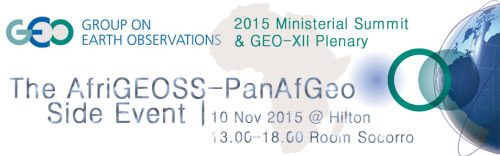
PanAfGeo at the AfriGEOSS Side Event

The Group on Earth Observation XII Plenary and the 2015 Mexico City Ministerial Summit, as well as all associated meetings and events, was hosted by the Government of Mexico and took in Mexico City from 9 to 13 November 2015.
The AfriGEOSS Side Event took place on the 10th of November 2015. The AfriGEOSS initiative, developed within the GEO framework, aims to enhance Africa’s capacity for producing, managing and using Earth observations data and information and to strengthen the link between GEO activities and existing capabilities and initiatives in Africa.
The Side Event reviewed the progress made towards the implementation of AfriGEOSS since its launch, including progress on developing the concept for data access and dissemination in Africa. During the event PanAfGeo has been presented to explore harmonization with existing efforts, especially in the area of mapping and training, and to create synergies and coordination with a number of activities contributing to AfriGEOSS.
PanAfGeo will enhance the capacity and role of African National Geological Surveys (i.e. regional mapping and exploration, mineral resources assessments, trainings, etc.), and therefore represents an opportunity for many African GEOSS stakeholders involved in the geosciences to have their concerns addressed. In this framework, the session initiated discussions on the involvement and role of non-Geological Survey stakeholders and the benefits to GEOSS. GEO has been formally listed as a key PanAfGeo stakeholder, and its opinion will be taken into consideration during the project development. Moreover PanAfGeo will partially continue the AEGOS (Africa-Europe Geoscientific Observation Network) Project, which was contributing to AfriGEOSS.

The Group on Earth Observation XII Plenary and the 2015 Mexico City Ministerial Summit, as well as all associated meetings and events, was hosted by the Government of Mexico and took in Mexico City from 9 to 13 November 2015.
The AfriGEOSS Side Event took place on the 10th of November 2015. The AfriGEOSS initiative, developed within the GEO framework, aims to enhance Africa’s capacity for producing, managing and using Earth observations data and information and to strengthen the link between GEO activities and existing capabilities and initiatives in Africa.
The Side Event reviewed the progress made towards the implementation of AfriGEOSS since its launch, including progress on developing the concept for data access and dissemination in Africa. During the event PanAfGeo has been presented to explore harmonization with existing efforts, especially in the area of mapping and training, and to create synergies and coordination with a number of activities contributing to AfriGEOSS.
PanAfGeo will enhance the capacity and role of African National Geological Surveys (i.e. regional mapping and exploration, mineral resources assessments, trainings, etc.), and therefore represents an opportunity for many African GEOSS stakeholders involved in the geosciences to have their concerns addressed. In this framework, the session initiated discussions on the involvement and role of non-Geological Survey stakeholders and the benefits to GEOSS. GEO has been formally listed as a key PanAfGeo stakeholder, and its opinion will be taken into consideration during the project development. Moreover PanAfGeo will partially continue the AEGOS (Africa-Europe Geoscientific Observation Network) Project, which was contributing to AfriGEOSS.

The Group on Earth Observation XII Plenary and the 2015 Mexico City Ministerial Summit, as well as all associated meetings and events, was hosted by the Government of Mexico and took in Mexico City from 9 to 13 November 2015.
The AfriGEOSS Side Event took place on the 10th of November 2015. The AfriGEOSS initiative, developed within the GEO framework, aims to enhance Africa’s capacity for producing, managing and using Earth observations data and information and to strengthen the link between GEO activities and existing capabilities and initiatives in Africa.
The Side Event reviewed the progress made towards the implementation of AfriGEOSS since its launch, including progress on developing the concept for data access and dissemination in Africa. During the event PanAfGeo has been presented to explore harmonization with existing efforts, especially in the area of mapping and training, and to create synergies and coordination with a number of activities contributing to AfriGEOSS.
PanAfGeo will enhance the capacity and role of African National Geological Surveys (i.e. regional mapping and exploration, mineral resources assessments, trainings, etc.), and therefore represents an opportunity for many African GEOSS stakeholders involved in the geosciences to have their concerns addressed. In this framework, the session initiated discussions on the involvement and role of non-Geological Survey stakeholders and the benefits to GEOSS. GEO has been formally listed as a key PanAfGeo stakeholder, and its opinion will be taken into consideration during the project development. Moreover PanAfGeo will partially continue the AEGOS (Africa-Europe Geoscientific Observation Network) Project, which was contributing to AfriGEOSS.

EuroGeoSurveys Director’s Workshop “Geological Infrastructure priorities in Africa and beyond”

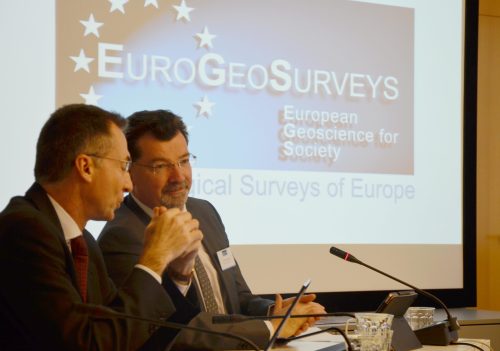
The EuroGeoSurveys Director’s Workshop took place on 25th March 2015 in Brussels. The yearly meeting of the Directors of the European Geological Surveys and Geological Surveys from all around the world was focused on the theme “Geological Infrastructure priorities in Africa and beyond”, discussing the geological infrastructure needs in Africa and in other areas of the world. The Workshop topic matched the High level Conference ‘EU-AU Joint Session on Infrastructures for the Minerals Sector’ of the previous week, focusing on the infrastructure needs of the minerals sector in Africa (including transport, ICT, water and energy as well as all other types of infrastructure).

EuroGeoSurveys welcomed high level guests from Africa, North America, Europe, Asia, etc. together with representatives of EU Institutions and stakeholders, resulting in a very high attendance of about 90 participants. Ms Françoise Moreau, Head of the Africa-EU Partnership, Peace Facility Unit at the European Commission’s DG for Internal Cooperation and Development, explained that in the context of the Joint EU Africa Strategy, of which Roadmap 2014-2017 was adopted last year, raw materials and mineral resources have been identified among the priorities for future cooperation and political dialogue between Europe and Africa. In this regard, the Pan-African Programme established in 2014, the first covering Africa as a whole, supports projects with added-value in areas of shared interest for the EU and Africa. This is why the EC supports the reinforcement of the cooperation between African and European geological surveys with a view to provide to interested African governments better information on their still unexploited mining resources. The economic boom of several African countries should be maximised and that growth should be translated in poverty reduction. This means that the exploitation of the benefits of raw materials should benefit local population.

The DG for Enterprise and Industry (DG GROWTH) is looking at the same direction. Ms Flor Pulido, Head of the Raw Materials, Metals, Minerals and Forest-based Industrie Unit at DG GROWTH, during her keynote speech, presented how EGS-OAGS cooperation on geological knowledge and skills can contribute to the EU-AU vision for raw materials. Mr Ramgwede, Permanent Secretary of the Organization of African Geological Surveys (OAGS), reiterated that the infrastructure is one of the key drivers of the competitiveness with a material impact on Africa’s potential growth. Mr Tiyapo Hudson Ngwisanyi Director of the Geological Survey of Botzwana (BGI), illustrated some of the challenges faced by BGI in restructuring the institute and how these challenges might be addressed with the cooperation EGS-OAGS.

PanAfGeo, ambitious project aiming at increasing knowledge and skills in African Geological Surveys, perfectly responds to these needs. The preliminary phase of PanAfGeo (a joint EGS-OAGS effort to produce a feasibility study) was recently concluded. New political developments are therefore expected in order to establish a long-term strategic cooperation in several areas such as governance of natural resources, sustainable exploitation of non-energy mineral resources, prevention and mitigation of natural and man-made disasters and support to the development of the local mining sector.
The EuroGeoSurveys Director’s Workshop took place on 25th March 2015 in Brussels. The yearly meeting of the Directors of the European Geological Surveys and Geological Surveys from all around the world was focused on the theme “Geological Infrastructure priorities in Africa and beyond”, discussing the geological infrastructure needs in Africa and in other areas of the world. The Workshop topic matched the High level Conference ‘EU-AU Joint Session on Infrastructures for the Minerals Sector’ of the previous week, focusing on the infrastructure needs of the minerals sector in Africa (including transport, ICT, water and energy as well as all other types of infrastructure).

EuroGeoSurveys welcomed high level guests from Africa, North America, Europe, Asia, etc. together with representatives of EU Institutions and stakeholders, resulting in a very high attendance of about 90 participants. Ms Françoise Moreau, Head of the Africa-EU Partnership, Peace Facility Unit at the European Commission’s DG for Internal Cooperation and Development, explained that in the context of the Joint EU Africa Strategy, of which Roadmap 2014-2017 was adopted last year, raw materials and mineral resources have been identified among the priorities for future cooperation and political dialogue between Europe and Africa. In this regard, the Pan-African Programme established in 2014, the first covering Africa as a whole, supports projects with added-value in areas of shared interest for the EU and Africa. This is why the EC supports the reinforcement of the cooperation between African and European geological surveys with a view to provide to interested African governments better information on their still unexploited mining resources. The economic boom of several African countries should be maximised and that growth should be translated in poverty reduction. This means that the exploitation of the benefits of raw materials should benefit local population.

The DG for Enterprise and Industry (DG GROWTH) is looking at the same direction. Ms Flor Pulido, Head of the Raw Materials, Metals, Minerals and Forest-based Industrie Unit at DG GROWTH, during her keynote speech, presented how EGS-OAGS cooperation on geological knowledge and skills can contribute to the EU-AU vision for raw materials. Mr Ramgwede, Permanent Secretary of the Organization of African Geological Surveys (OAGS), reiterated that the infrastructure is one of the key drivers of the competitiveness with a material impact on Africa’s potential growth. Mr Tiyapo Hudson Ngwisanyi Director of the Geological Survey of Botzwana (BGI), illustrated some of the challenges faced by BGI in restructuring the institute and how these challenges might be addressed with the cooperation EGS-OAGS.

PanAfGeo, ambitious project aiming at increasing knowledge and skills in African Geological Surveys, perfectly responds to these needs. The preliminary phase of PanAfGeo (a joint EGS-OAGS effort to produce a feasibility study) was recently concluded. New political developments are therefore expected in order to establish a long-term strategic cooperation in several areas such as governance of natural resources, sustainable exploitation of non-energy mineral resources, prevention and mitigation of natural and man-made disasters and support to the development of the local mining sector.

The EuroGeoSurveys Director’s Workshop took place on 25th March 2015 in Brussels. The yearly meeting of the Directors of the European Geological Surveys and Geological Surveys from all around the world was focused on the theme “Geological Infrastructure priorities in Africa and beyond”, discussing the geological infrastructure needs in Africa and in other areas of the world. The Workshop topic matched the High level Conference ‘EU-AU Joint Session on Infrastructures for the Minerals Sector’ of the previous week, focusing on the infrastructure needs of the minerals sector in Africa (including transport, ICT, water and energy as well as all other types of infrastructure).

EuroGeoSurveys welcomed high level guests from Africa, North America, Europe, Asia, etc. together with representatives of EU Institutions and stakeholders, resulting in a very high attendance of about 90 participants. Ms Françoise Moreau, Head of the Africa-EU Partnership, Peace Facility Unit at the European Commission’s DG for Internal Cooperation and Development, explained that in the context of the Joint EU Africa Strategy, of which Roadmap 2014-2017 was adopted last year, raw materials and mineral resources have been identified among the priorities for future cooperation and political dialogue between Europe and Africa. In this regard, the Pan-African Programme established in 2014, the first covering Africa as a whole, supports projects with added-value in areas of shared interest for the EU and Africa. This is why the EC supports the reinforcement of the cooperation between African and European geological surveys with a view to provide to interested African governments better information on their still unexploited mining resources. The economic boom of several African countries should be maximised and that growth should be translated in poverty reduction. This means that the exploitation of the benefits of raw materials should benefit local population.

The DG for Enterprise and Industry (DG GROWTH) is looking at the same direction. Ms Flor Pulido, Head of the Raw Materials, Metals, Minerals and Forest-based Industrie Unit at DG GROWTH, during her keynote speech, presented how EGS-OAGS cooperation on geological knowledge and skills can contribute to the EU-AU vision for raw materials. Mr Ramgwede, Permanent Secretary of the Organization of African Geological Surveys (OAGS), reiterated that the infrastructure is one of the key drivers of the competitiveness with a material impact on Africa’s potential growth. Mr Tiyapo Hudson Ngwisanyi Director of the Geological Survey of Botzwana (BGI), illustrated some of the challenges faced by BGI in restructuring the institute and how these challenges might be addressed with the cooperation EGS-OAGS.

PanAfGeo, ambitious project aiming at increasing knowledge and skills in African Geological Surveys, perfectly responds to these needs. The preliminary phase of PanAfGeo (a joint EGS-OAGS effort to produce a feasibility study) was recently concluded. New political developments are therefore expected in order to establish a long-term strategic cooperation in several areas such as governance of natural resources, sustainable exploitation of non-energy mineral resources, prevention and mitigation of natural and man-made disasters and support to the development of the local mining sector.
https://business-hall.khm.gov.ua/ https://cnap.khm.gov.ua/ https://shevchenko.khm.gov.ua/ https://veteran.khm.gov.ua/ https://zonbox.pl/